Denver Water Sets Net-Zero Carbon Emissions Goal for 2030
DENVER ― Wednesday, Nov. 6, 2024 ― The Denver Board of Water Commissioners approved a resolution today committing Denver Water to a net-zero carbon emissions goal by the end of 2030, the utility’s latest push toward sustainable operations in its ongoing work to address the challenges of climate change. Achieving the goal will require Denver Water to rapidly deploy renewable energy generation across its facilities, continue to increase energy efficiency, electrify its buildings and fleet, and...
Gaps in Laws and Policies Leave Water and Sanitation Systems Vulnerable to Harmful Climate Impacts in Frontline Communities Across the US, New Report Finds
Research Highlights Climate is Changing Faster than Laws Have Responded, Leaving Infrastructure with Insufficient Resilience and Risking a Widening Water Access Gap OAKLAND, CA – New research released today by the Pacific Institute and the Center for Water Security and Cooperation (CWSC) reveals existing laws and policies fail to protect water and sanitation systems from climate change impacts in frontline communities across the United States. The report, “Law and Policies that Address Equitabl...
Stantec Chosen to Design New Biosolids Treatment Facility for City of Winnipeg
Winnipeg, Manitoba Sustainable biosolids treatment is crucial amid population growth and new regulations October 16, 2024—As part of a progressive design-build team, Stantec, a global leader in sustainable design and engineering, will lead the design for a new biosolids facility at the City of Winnipeg’s North End Sewage Treatment Plant in Winnipeg, Manitoba. This is the City’s first progressive design-build project and a major initiative to sustainably treat biosolids....
Water infrastructure projects are abundant as cities and states face shortages
America has water problems. Water stress can be found in almost every state. New Mexico falls into the category of extremely high ‘water stress’ for multiple reasons, including climate change, limited rainfall and reduced volume of water in both the Rio Grande and Colorado rivers, which are major water resources for the state. Arizona, California, Nebraska and Colorado also fall into the category of water stressed states. These states struggle with high water demands brought on by droughts, poll...
Michigan’s Rural Communities Awarded Over $42 Million to Invest in Water Infrastructure
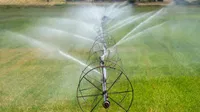
A row of irrigation sprinklers spray a field on a farm during a drought in Saanich, British Columbia, Canada, on Wednesday, July 12, 2023. Premier David Eby said that much of the province hasn’t ever experienced the current level of drought this early in the summer, Canadian Press reports. Photographer: James MacDonald/Bloomberg via Getty Images Funding Will Improve Access to Safe Drinking Water for Thousands of Michiganders LANSING, Mich.— The Michigan Infrastructure Office a...

Industry to play critical role in securing U.S. domestic freshwater supply, reveals Schneider Electric research at WEFTEC 2024
More than a third of states already facing ‘medium’ to ‘extremely high’ water stress today Water stress expected to increase 9% on average across the US by 205013 Industry can increase water efficiency by up to 40% with automaton and digital technologies New Orleans, US, October, 8, 2024 – Schneider Electric, the leader in the digital transformation of energy management and industrial automation, has today...
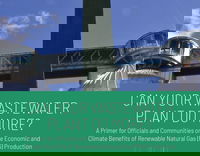
Energy Vision Primer Highlights Potential of Wastewater Plants to “Co-Digest” Food Waste, Produce Renewable Energy, and Help Meet 2030 Methane Emissions Goal
[New York, NY ] The sustainability NGO Energy Vision today released a primer for municipalities on how their local wastewater treatment plant(s) may be able to produce renewable energy and help fight climate change, titled “Can Your Wastewater Plant Do More?” The primer lays out straightforward criteria for determining whether wastewater plants can be retrofitted or equipped to produce renewable natural gas (RNG), what the main costs and challenges are; and whether they could also accept and...
Great Lakes Water Authority Partners with U.S. Army Corps of Engineers on Regional Flood Mitigation Study
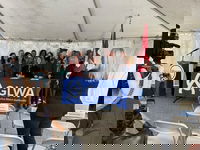
Partnership will study flooding problems across southeast Michigan and formulate alternatives to reduce flood risk Initial funding for the study ($500,000) is contained in federal appropriations for fiscal year 2024 and funding for fiscal year 2025 is pending Congressional approval; GLWA will provide a 50/50 match with in-kind-services to complete the study Study kicked off with three-day technical planning charrette attended by key regional partners to establish the project’s broad goals...
bNovate Technologies unveils new BactoSense product line and pioneers industry’s first UV disinfection validation cartridge
Innovation provides customized solutions to meet unique water quality needs ECUBLENS, Switzerland – bNovate Technologies, a leader in rapid microbial detection for water, remains at the forefront of innovation, advancing to meet the unique needs of the water industry with the introduction of three new BactoSense models and a groundbreaking UV disinfection validation cartridge. The BactoSense flow cytometer is a proven and trusted solution for water hazard prevention, providing near-re...
Great Lakes Water Authority to Enhance Corrosion Control Measures to Provide Added Protection
GLWA undertook a proactive, multi-year study in advance of changes in state and federal lead and copper regulations Levels of orthophosphate in GLWA’s treated water will increase to 2.4 milligrams per liter in a phased approach beginning in October 2024 (pending approval from EGLE) While there is no lead in GLWA’s water and no lead pipes are used in GLWA’s transmission system, upping the orthophosphate dosage will provide added protection for our member partners’ local systems DETR...
Stormwater Interview with Robert Page, P.E., Vice President, HNTB
TriMet’s Banfield Type 1 Substation Replacement Project

February Issue 2026