WaterCAD Helps Sabesp Identify Optimal Hydraulic Strategy, Solving Water Supply Issues
Sabesp MA is a mixed-capital company that provides water and sewage services to the 364 municipalities in the state of São Paulo, Brazil. It is considered one of the largest water and sewage service providers in the world, supplying potable water to 27.7 million people. Two pump stations, Vila Bela and Jardim da Conquista, pump water from the Rio Claro aqueduct, each through an 800 millimeter pipe. The Vila Bela pump station supplied the Jardim da Conquista tank with an average flow of 708 lite...

Philadelphia Water Streamlines Operations with Enterprise Data Management System
The Philadelphia Water Department (PWD) is a municipal utility providing a population of nearly 1.7 million people in three eastern Pennsylvania counties with integrated water, wastewater, and stormwater services. The utility is responsible for planning, design, construction, operation, and maintenance of the necessary infrastructure. By integrating the rapidly growing ProjectWise data management system with the city’s geospatial database and Capital Program Integrated Tracking (CAPIT) database,...

Is Green Infrastructure Diminishing Innovation?
Since the Environmental Protection Agency, and in turn state and local regulators, have gone all in on green infrastructure (GI) and low impact development (LID) concepts a seemingly regrettable consequence has emerged. Topics specific to the broader adoption and implementation of GI have monopolized our collective dialog on stormwater management of late. The predominantly positive press and barrage of GI heavy conference agendas seemingly suggest that if we apply GI far and wide then water q...
Water Network Analysis Reduces Need for Further Infrastructure Investments
In an age characterized by growing populations and crumbling infrastructure it’s natural to look to new technology solutions for salvation. In many parts of the world, big investments in new infrastructure seem both highly desirable and unattainable—as much as new solutions are needed, the brutal fact of limited resources often limits investment to rehabilitations or new structures that are affordable and constructible within local means. Three water network projects highlighted at the Be Ins...
Sewer Heat Recovery Provides Low-Cost Recycled Energy
In every urban area, heat that humans have generated to shower, wash clothes, cook, and so on flows underground — in the sewers, making them very warm. Today, sewers represent the largest source of heat leakage in buildings. Even toilet water, which is at room temperature, is warm compared to the ground. Sewer air, pipe material (and thus conductivity), surrounding soil type, and other factors also affect the final temperature of waste water, according to Genevieve Tokgoz, Project Engineer in th...
Sensor Data Helps Calibrate Water Models
Thomas M. Walski, Ph.D., P.E., D.WRE, F. ASCE, is Bentley Systems senior product manager for Water and Sewer Products. Walski has been intimately involved with the modeling of water networks for decades, and has worked with Bentley Systems to introduce seminal hydraulic modeling tools such as WaterGEMS and WaterCAD. He recently discussed the impact of modeling and sensing on modern water systems with Informed Infrastructure. Informed Infrastructure: Tom, what’s your role at Bentley Systems, a...
A Tidal Shift in Water Network Management
Water consumption worldwide is on the steepest of hockey stick curves—since 1950, annual consumption has tripled, and in 2006 passed 4,300 km3… that’s about 30% of the available supply of renewable water. Water consumption is expanding considerably faster than population growth—more than double the rate—and much of that growth is due to irrigation. Numbers like that mean that most regions, and especially densely populated areas, are thinking and planning seriously when it comes to water suppl...
Stormwater Interview with Robert Page, P.E., Vice President, HNTB
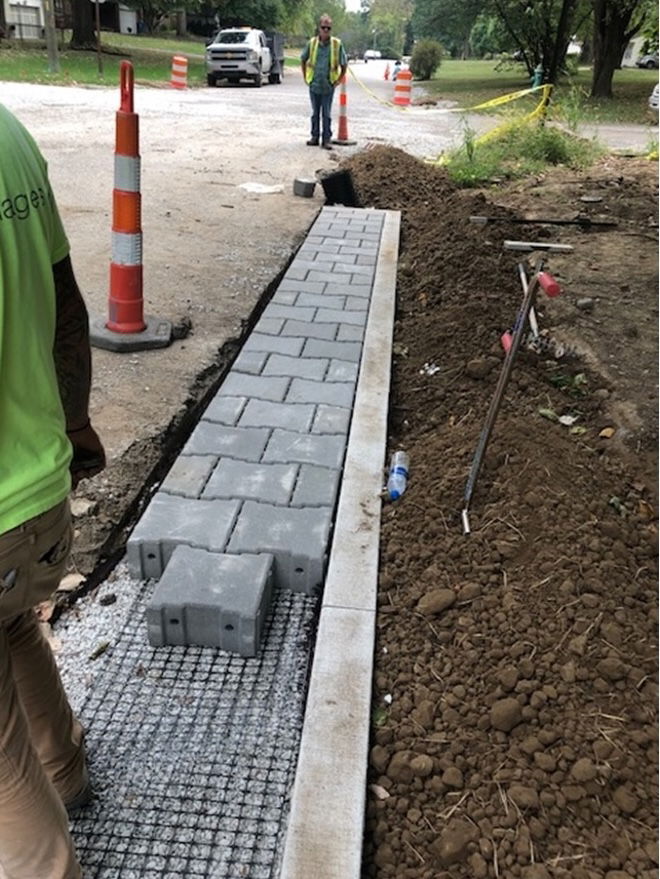
TriMet’s Banfield Type 1 Substation Replacement Project

February Issue 2026