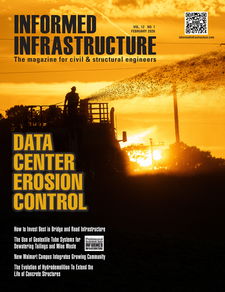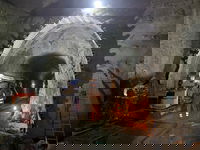
How Cloud-Based Data Management Benefits Large Infrastructure Projects
All graphics: Credit Donatsch + Partner AG. Cloud technology is unlocking the value of huge reality capture datasets by enabling stakeholder collaboration and all-digital field-to-office-to-field workflows. Data sharing and collaboration among multiple stakeholders, including government agencies, contractors, engineers and environmental experts, is a significant challenge for large infrastructure projects. Subsequent delays, miscommunications and inefficiencies can add to costs...
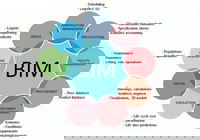
How BIM Integration Enhances Infrastructure Design and Construction
Imagine having all the essential details about your building at your fingertips. From proactive design to maintenance schedules and all other necessary information. This imagination meets reality with the help of Building Information Modeling (BIM), which is used to create a digital representation of the basic characteristics for an infrastructure. It’s a collaborative process that involves architects, engineers and contractors working together to design a complete 3D model of a project. T...

Back to Basics: Delivering Major Capital Infrastructure Projects In Complex Times
Figure 1. Activity-level plans provide the necessary information to enable execution and problem solving. The industry has certainly changed since brilliant Scottish engineer Thomas Telford stated that major infrastructure projects (such as his famous Menai Suspension Bridge design in Wales) can be accomplished with “a moderate degree of skill and perseverance.” Planning, developing and delivering modern infrastructure grows more challenging with each passing day. Our once-stable sector is...

The 21st Century Renaissance of Tied-Arch Bridges
The Veterans Memorial Bridge (Image) Isambard Kingdom Brunel’s celebrated bridges—such as the Windsor Railway Bridge—are sometimes referred to as the earliest built examples of tied-arch bridges. But while Brunel’s wrought iron structures were groundbreaking and remain engineering landmarks, their primary innovation lies in their truss configurations, not in the development of the tied-arch system. Images describe true-arch (top) and tied-arch (bottom) behavior. Differences in comp...

Ion-Exchange PFAS Removal Expands in Northern California
Northern California water agency Zone 7 opened its second PFAS treatment facility in March 2025. (Zone 7 Water Agency) In August 2022, California water agency Zone 7 faced the prospect of taking its most productive well out of service during the driest three water years on California record. Located about 15 miles east of the San Francisco Bay in Pleasanton, Calif., the agency’s Stoneridge Well had shown elevated levels of perfluorohexane sulfonic acid (PFHxS), a chemical that had drawn sc...
We Don’t Have a Wildfire Problem. We Have a Building Problem.
Photos show a home in Napa under construction (above) and a completed fire-resistant home (below), both built with RSG’s resilient panel building system. Smarter materials and fire-conscious design offer a path to long-term resilience When the Tubbs Fire tore through Northern California in 2017, it left behind a grim picture: more than 5,600 structures gone, entire neighborhoods in Santa Rosa reduced to rubble. And yet, amid the scorched earth, a small handful of homes still stood—a...

Progressive Design-Build Delivers a High-Risk, High-Reward Bioenergy Facility
Stantec used Oculus 3D augmented-reality headsets to convey design and operation details to owners and facility managers. The $271 million Piscataway Bioenergy Facility in Prince George’s County, Md., (part of the Washington, D.C., metro area) is one of the most technically sophisticated sewage facilities ever completed in the United States. It’s only the seventh facility in the United States to implement thermal hydrolysis, a two-stage process that treats sludge with high-pressure boiling...
Aging Infrastructure and Climate Risks: The Urgent Need for More Modern Monitoring and Assessments
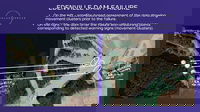
Satellite-based assessment of the Edenville Dam (conducted post-catastrophe) identified deformation clusters at the eventual breach area that were showing diverging movement up to 14 months before the failure. Deformation clusters exhibiting movement across the dam are typical signs of a dam’s weakening structural integrity. More frequent and severe weather events tied to changes in global climate patterns are testing the limits of aging infrastructure. Dam and tailings storage-fa...

Unlocking Curbside Potential: A Guide for Engineers on Modern Curb Management
As cities grow denser and demand for curbside space rises, the need for efficient, data-driven curbside management has become critical. For engineers working across infrastructure—from transportation and water to land development—this shift opens doors to innovative, integrated solutions. By visualizing, analyzing and monetizing curbside assets, we can alleviate urban congestion and foster a more sustainable urban environment, benefiting residents and local businesses. In my role as participant...

Ocean Pavilion at Seattle Aquarium Showcases Design and Human Experience
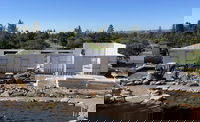
Following removal of the Alaska Way Viaduct, Seattle’s Waterfront has been reimagined as a vibrant promenade stretching across the city. At the water’s edge, the Seattle Aquarium’s new Ocean Pavilion offers a glimpse of aquatic life at the far reaches of the Pacific Ocean while adding an architectural gem to the harborside cityscape. (Lara Swimmer/Est) Emerging from the unification of place, purpose and point of view, the best of the built environment amazes in many ways. Considering...
Stormwater Interview with Robert Page, P.E., Vice President, HNTB
TriMet’s Banfield Type 1 Substation Replacement Project

February Issue 2026