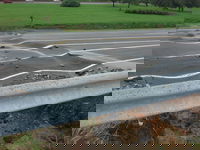
Asset Management: What does it mean to you?
The need for an asset management program is beginning to resonate with municipalities throughout the country. Many municipal employees are finding themselves responsible for researching and developing a solution that will meet the unique infrastructure needs for their communities now and in the future. According to the American Association of State Highway and Transportation Officials, asset management broadly defined, refers to any system that monitors and maintains things of value to an ent...
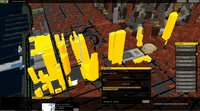
Designing with Data: Shaping Our Future Cities
With the dawn of a ‘smart’ era the world is undergoing a transformation not seen since the industrial revolution. As more and more of us take to twitter, use the internet to influence governance or map our daily activities, policy makers and business are waking up to the fact that data generated by this virtual activity not only allows greater engagement with individuals and communities, it is also providing opportunities to shape our physical environment. As the virtual and real world increa...
Mapping the Maya: Technology Integration Captures Cultural Heritage
To set the stage of this essay I would ask each reader to think back to a time in their life when they were asked “what do I want to do when I grow up?” This simple but powerful question has been recurrent for centuries with varying answers, to the demise and success of millions, and was just as profound for me. As a young child I was always drawn to history and more importantly the swashbuckling endeavors of an ever-so-famous and iconic movie character, Indiana Jones. I can remember being fasci...
Mapping Local Resources Helps San Jose Battle Food Insecurity
Garden to Table volunteer collects fruit tree data with the Trimble Juno SB mobile device. Food security is a growing social and economic challenge that knows no political boundaries. Even in the United States, an astonishing 18 million households were labeled ‘food insecure’ in 2011 because they lacked the means at some point during the year to feed all of their members. The negative impacts of food insecurity can range from poor academic performance and rising healthcare costs to increased...
Smarter Driving Key to Sustainable Transportation Planning
In the popular mind, smarter, greener, and more sustainable transportation is generally equated with mega-projects like high speed rail, light rail, long tunnels for rail transport and, well, new subways and other versions of railway transportation. London’s Crossrail project—which will build ten new stations, dig two new tunnels, and lay many miles of new high speed railway—is a good example; it’s currently Europe’s biggest construction project. But academics and planners who study transport...
Achieving Model-Based Design for the Smart Grid
Smart Meters and SCADA Contribute a Big Data Perspective Smart meters and intelligent electronic devices provide granular data about the state of the utility network in near real-time. The availability of such data is in no small part what is making the smart grid, well, smart. Now, this data is being harnessed by utilities for greater customer insight and designs that are informed by performance. In one sense, the smart-grid is a dynamic real-time system that adapts and heals as condition...
Sewer Heat Recovery Provides Low-Cost Recycled Energy
In every urban area, heat that humans have generated to shower, wash clothes, cook, and so on flows underground — in the sewers, making them very warm. Today, sewers represent the largest source of heat leakage in buildings. Even toilet water, which is at room temperature, is warm compared to the ground. Sewer air, pipe material (and thus conductivity), surrounding soil type, and other factors also affect the final temperature of waste water, according to Genevieve Tokgoz, Project Engineer in th...
A Tidal Shift in Water Network Management
Water consumption worldwide is on the steepest of hockey stick curves—since 1950, annual consumption has tripled, and in 2006 passed 4,300 km3… that’s about 30% of the available supply of renewable water. Water consumption is expanding considerably faster than population growth—more than double the rate—and much of that growth is due to irrigation. Numbers like that mean that most regions, and especially densely populated areas, are thinking and planning seriously when it comes to water suppl...
Roadway Sensors Provide Real-Time and Historic Data
Robert Bray is a senior software architect at Autodesk, Inc., a computer aided design firm that readers may have heard about. He recently sat down with Informed Infrastructure to discuss his view of sensored roadways, and the uses of the information they develop. Informed Infrastructure: Robert, can you tell us how you came to be interested in sensored roadways? Bray: At Autodesk, I'm primarily responsible for the Infrastructure Suite, including our roadway and utility design products, and...
Toward Intelligent Infrastructure
The United Nations Human Settlements Program (UN-HABITAT) report discusses the strain this global demographic shift is placing upon current urban infrastructure. We are living in a world with a rapidly growing population and an urbanization rate that is increasing year over year. According to the United Nations Human Settlements Programme (UN-HABITAT), people living in urban areas will increase from 50% worldwide in 2011 to 75% in 2050. Over 2.5 billion people will move to urban areas in the...
Stormwater Interview with Robert Page, P.E., Vice President, HNTB
TriMet’s Banfield Type 1 Substation Replacement Project

February Issue 2026