Drones Becoming Integral for Infrastructure Projects
Trevor Byrd, LSIT, Anderson Engineering survey party chief, uses a drone to inspect a bridge over the Spring River in Carthage, Mo. (American Public Works Association) Ed Bartels, P.E., L.S., assistant county engineer for Johnson County, Iowa, calls himself a “drone evangelist,” employing them in a powerful toolkit that includes AutoCAD and GIS. “We’ve always tried to leverage technology here at the county,” he says. “Like everybody, we don’t have enough money for all the work we would l...

Association Update: Steel Tube Institute Hires New Director
On Oct. 14, 2022, Informed Infrastructure Editorial Director Todd Danielson interviewed Holly Schaubert, P.E., Institute Director: HSS for the Steel Tube Institute (STI). The Steel Tube Institute was formed in 1930 when a group of manufacturers joined forces to advance the steel industry. Today it is the leading technical resource in North America for steel tube products. STI is dedicated to advancing the growth and competitiveness of North America’s steel tubular products. Its strength is brin...
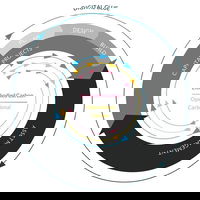
Can BIM Enable Successful Green Retrofits of Existing Buildings?
A graphic shows the “digital glue” toward net-zero. By Shivani S. Soni and Geoffrey A. Tears BIM! Sustainability! Net-zero! Lifecycle Carbon! Green Retrofit! All previously thought to just be buzzwords, these terms are gaining more traction in the AECO industry as it starts to update older buildings and build more-efficient ones. In 2008, the UK passed “The Climate Change Act” establishing emission-reduction goals that now are law. The UK is the first nation to set a binding mitigatio...

Michigan DOT To Develop Electrified Road
An electric bus and truck are being charged on an electrified road in Sweden as part of the Smartroad Gotland Project, which aims to build knowledge and create possibilities for a large-scale development of electric roads throughout the country. A consortium of companies has been selected to build the first wireless in-road charging system in the United States. The transportation sector generates the largest share of carbon dioxide emissions in the United States, accord...
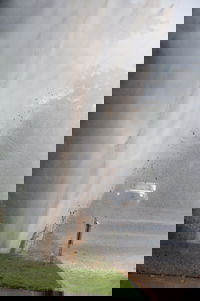
Under Pressure: As Water Main Breaks Cause Havoc, A New Approach Is Welcome
In New England, winter is followed by “mud season.” In California, the drier months are “wildfire season.” For water utilities, the coming of fall means it’s “water main break season.” Unfortunately, this season often seems to last all year. According to the American Water Works Association (AWWA), there are about 240,000 water main breaks in the United States every year. On the whole, the nation’s 1 million miles of water mains are successful in delivering a safe, reliable water supply to home...
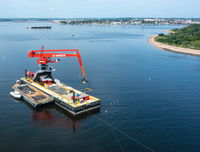
Living Breakwaters Support Staten Island’s Shoreline Resilience
Triton Marine Mattresses were chosen to help build a system of living breakwaters in the Raritan Bay off the coast of Staten Island. When it comes to the myriad problems resulting from climate change, it’s difficult to overstate the gravity of the problems facing coastal communities worldwide. Coastal erosion costs roughly $500 million per year for property loss in the United States. Scientists are confident sea levels will continue to rise through the end of this century and beyond. Where...
Counting Carbon: Reading Between the Lines To Understand What Matters in Sustainability
Perhaps now more than ever, sustainability remains a predicament. In the nearly 30 years since the U.S. Green Building Council launched the Leadership in Energy and Environmental Design (LEED) certification program, the murky waters of certification vs. sustainability remain clouded by contending interests. At the core of the conversation is how to compel sustainability in everyday lives by design as well as how to measure impacts, regulate it, incentivize it and, hopefully, one day benefit from...
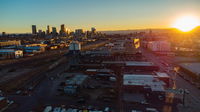
Don’t Knock on Wood: Nation’s Second-Tallest Mass-Timber High-Rise Gets Go Ahead in Denver
In the foreground (adjacent to the medical marijuana dispensary sign “Whole Meds”) is 3495 Wynkoop in Denver’s RiNo District, soon to be home of the nation’s second-tallest mass-timber high-rise. Denver’s River North Art (RiNo) District seems the very definition of an up-and-coming mixed-use neighborhood. “It’s definitely the happening place to be developing, not just in Denver, but in the whole country,” says Andrew Katz, founding partner (with his father and brother) of Katz Development....
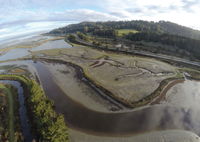
Wetlands Restoration: White Slough Project Engineers a Model for the Future
(Image: USGS) In addition to being the first project in Humboldt Bay to tackle a failing levee, sea-level rise and the loss of important habitat by improving infrastructure, the White Slough Tidal Wetlands Restoration Project provides a resilient living shoreline and flood protection for ranchlands and roads (part of US 101). This pilot project would become a team effort, spanning five years, two project leaders, three project managers and many other dedicated professionals. The...
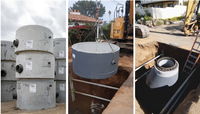
Product Comparison: Precast vs. Cast-in-Place Manhole Base
Photos show precast manholes stacked for deployment (left), being lowered into place (middle) and ready for fill and grading (right). Construction today is all about one word: impact. Low-impact construction is all about designing and producing a sequence and experience that will have the least effect on the existing landscape. That translates into a shorter construction process achieved via the mitigation of labor costs and resulting time savings. High-impact construction, however, can...
Stormwater Interview with Robert Page, P.E., Vice President, HNTB
TriMet’s Banfield Type 1 Substation Replacement Project
February Issue 2026