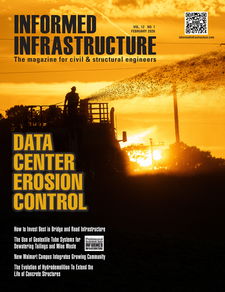
Engineering the Future: Just Do It!
I remember when Nike launched its “Just Do It” media campaign—it was brilliant! The application to infrastructure was obvious to me. Three words that sum up the need to stop analysis paralysis and get things built. When you look at the masterworks from the past—the lack of electronic tools, yellow iron to build things, complex models to optimize the design, multiple funding sources, etc.—it’s amazing what was built and, in many cases, how quickly it was built. Negative Inertia I believe we’ve...

Future Forward (Powered by ACEC): AI and the Future of Engineering: (Don’t) Rage Against the Machine
Go to any gathering of engineers—whether it’s a professional conference or a happy hour—and you’re almost guaranteed to hear a discussion about AI and how much it’s going to change our industry. (Notice I said “going to” change as opposed to “could” change.) A recent study by the ACEC Research Institute, “The Role of Artificial Intelligence in the Engineering Industry” (visit iimag.link/HLPrk), supports and quantifies the anecdotal evidence that AI already is playing a huge role in what engineer...

Change Leader: Stormwater Research to Raise Its Profile, Encourage Collaboration
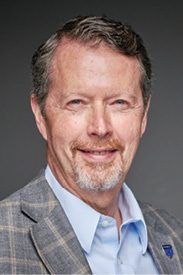
Brian King Chris Stoneburg This interview was recorded by Todd Danielson, the editorial director of Informed Infrastructure. You can watch a video of the full interview above or by visiting iimag.link/NsfbK . Brian King is the executive vice president of product management, marketing and sustainability for Advanced Drainage Systems (ADS). Chris Stoneburg is the director of product development, ADS. Changing Perceptions When Advanced Drainage Systems, Inc. (ADS) decid...
Getting Geotechnical: Rockefeller Wildlife Refuge: A Shoreline Stabilization Success Story
More than 20 years ago, the Louisiana Department of Wildlife and Fisheries discovered the Rockefeller Wildlife Refuge, which borders the Gulf of Mexico for 26.5 miles, was losing about 50 feet of land per year. This loss was estimated to increase to 300 feet annually by 2016. For many, it seemed that soon there would be no land left. However, a solution was in the works. The Rockefeller Refuge Gulf Shoreline Stabilization Project sought to construct breakwaters to combat the quickening erosion....
Executive Corner: Why Do Some A/E Firms Trade at Higher Valuation Multiples?
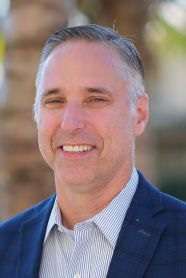
As I reflect on my 36 years in the advisory industry, I find it valuable to share insights on what I prioritize when evaluating A/E firms and understanding the drivers of their value. Many appraisers heavily rely on experience and key metrics to determine value, but have you ever wondered why some firms command higher valuation multiples than others within the same sector? Key Variables Influencing Valuation Among the key variables influencing valuation multiples are earnings capacity, growth...

Thoughts from Engineers: FEMA: An Agency Long Linked to Crisis and Risk Prevention
Few U.S. agencies are so regularly at the center of the public’s attention like the Federal Emergency Management Agency (FEMA). It’s an agency with many responsibilities and statutory obligations, including oversight and administration of the National Flood Insurance Program and multiple grant programs, crisis-response duties, and other tasks. Its performance record is routinely examined—and routinely criticized. Despite some truth to claims that its size, expanding responsibilities and bureauc...

Transportation Troubleshooting: YARD Work: Harnessing Advanced Technologies for Efficient Transit Operations
Transit agencies across the United States continue to face major budget restraints and staffing shortages. This is why opportunities for innovative research and development are becoming even more crucial, such as the greater implementation of automated vehicles (AVs). In April 2025, U.S. Transportation Secretary Sean P. Duffy unveiled the National Highway Traffic Safety Administration’s new AV Framework. The first actions of this framework are meant to accelerate the modernization of Federal Mo...
Engineering the Future: Does Civil Engineering Have the Courage to Change?
About a year ago, the American Society of Civil Engineers (ASCE) executive committee established the task committee on “Transforming our Workforce.” It was to be a “blue-sky” exercise, first to use a blank sheet of paper to design how we would approach outreach, multiple pathways toward becoming a civil engineer, what the undergraduate curriculum should look like and how we would tackle licensure. After we had a vision, the committee was to plot the course to achieve the vision. It has been a m...
From the Editor: Contemplating the Interconnected Role of Humans and Nature
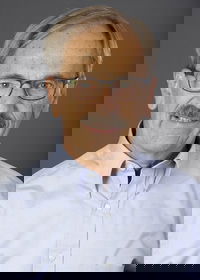
I’ve been reading about the role the environment plays in our society—past, present and future—and it’s raising questions I don’t know the answer to, but questions that absolutely need answers. Many of our readers know more about this topic than me, but I want to review some of the roles our environment plays, at least so I can frame some of the questions that come to mind. Our Journey Long ago, people settled near rivers as a water source. They chose the geography to better plant and harvest...
Future Forward (Powered by ACEC): The Tax Debate: A Pivotal Moment
Powered by: The 2017 Tax Cuts and Jobs Act (TCJA) ushered in substantial changes to the American tax code, promoting economic growth and providing businesses with the tools needed to invest, expand and innovate. It has been a catalyst for the engineering industry’s stratospheric growth in recent years, which, in turn, has supported millions of direct and indirect jobs and injected billions of dollars into the overall U.S. economy. To paraphrase an often-misquoted line: what’s good for...
Stormwater Interview with Robert Page, P.E., Vice President, HNTB
TriMet’s Banfield Type 1 Substation Replacement Project

February Issue 2026