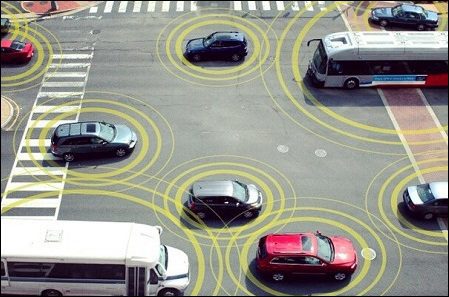
In a series of letters to the Federal Highway Administration and Federal Transit Administration, the American Association of State Highway and Transportation Officials voiced the support of state departments of transportation for efforts to develop and deploy automated driving systems, connected vehicles and highly automated vehicles.
In a
, AASHTO President John Schroer – commissioner of the Tennessee DOT – wrote that "there has been, and will continue to be, a strong partnership between the state DOTs and FHWA" on issues relating to vehicles that electronically connect with each other and with infrastructure to aid traffic management, and highly automated systems that can increasingly take over steering and braking functions.
"There is great potential that connected and automated vehicles (CAV) will have in improving safety, enhancing mobility and reducing the environmental impact of surface transportation systems," the letter added.
It underscored the role of state DOTs in helping guard roadway safety. "Most important to AASHTO and the state DOTs will continue to be the safety associated with the implementation of CAV. Safety has been, and will remain, at the forefront of AASHTO's policy goals as state DOTs have the primary responsibility for the safe and efficient movement of people and goods on our nation's highways and streets."
AASHTO sent it in response to a formal FHWA request for comments.
The association emphasized that "the transformative nature of CAVs is just now coming into focus," and that "there are still many questions to be asked from both policy and technological perspective."
AASHTO also said its response in the letter "is but a small summary of the needs and concerns of the state DOTs. While the questions posed by FHWA cover a significant breadth of the issues, any one of these questions must be covered in significantly more depth."
In addition, on March 5 AASHTO and the Alliance of Automobile Manufacturers sent the FHWA a
that said they support "a common theme of continued industry collaboration among USDOT, state and local transportation agencies, and the private sector. The involvement of all three stakeholder groups-working in a cooperative and collaborative manner-will be crucial to the successful deployment of CAVs."
Separately, on March 2
that "overall, AASHTO members are hopeful that FTA's interest in automated transit bus research and removing barriers to their implementation can lead to further innovation."
He noted that "AASHTO strongly supports a multimodal approach" to providing travel options, and said AASHTO's member agencies "work every day with local transit providers to provide vital public transportation services in small urban and rural communities. The state DOTs remain fully committed to serving these communities, and especially people with disabilities and seniors who need mobility assistance."
AASHTO said through the FTA's efforts on automated buses, "we truly hope to avoid federal regulations or legislation that would limit a state and local governments' efforts to test and demonstrate these automated transit vehicles."
And it emphasized the role federal support can play in deploying such new technologies. State DOTs, AASHTO said, "will be looking to FTA and the automated transit vehicle industry to become reliable partners, providing much-needed funding for these technological innovations while supporting states on the public infrastructure and business models necessary to accommodate them in our states and local communities."