.jpg)
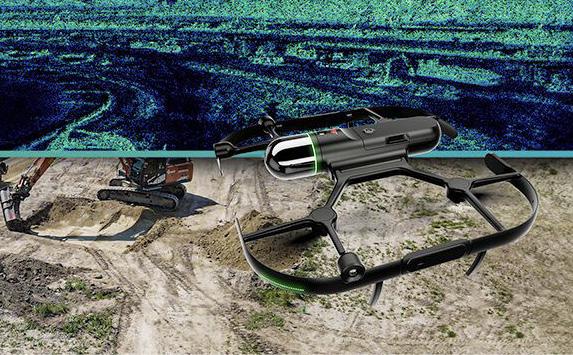
Autonomous flying laser scanners capture structures and environments to create 3D point clouds while flying, allowing for the scanning of hard-to-reach places while offering a lightweight, easy-to-use experience. The Leica BLK2FLY uses omnidirectional radar and LiDAR to avoid obstacles for accurate, uninterrupted and safe scanning.
The March 2024 collapse of Baltimore’s Francis Scott Key Bridge after a cargo ship crashed into it might be a turning point in how the country looks at its infrastructure—or at least it should be.
Following the disaster that claimed the lives of six people, the National Transportation Safety Board (NTSB) recommended vulnerability assessments for 68 bridges in 19 states. The agency wants bridge owners to determine the risk of catastrophic collapse from vessel collisions, especially considering the increased size and weight of modern ocean cargo vessels.
Like the Key Bridge, the 68 targeted bridges predate the guidance established by the American Association of State Highway and Transportation Officials in 1991 and lack a current vulnerability assessment. In 1994, the Federal Highway Administration started mandating that new bridges be designed to minimize the risk of a catastrophic bridge collapse from a vessel collision.
Bridges on the list include historical landmarks such as New York City’s Verrazzano-Narrows Bridge, the Chicago Skyway Bridge and San Francisco’s Golden Gate Bridge. The NTSB emphasizes the need for immediate action to implement comprehensive risk-reduction plans.
There’s broad agreement on the need to revitalize our nation’s infrastructure; bridges and roads are crumbling, and highways are no longer adequate for our needs and how we move. Where opinions differ is how to approach the need.
While discussing the need to overhaul the country’s infrastructure is a step in the right direction, too often, the dialog has focused on the wrong approach. The question isn’t whether a company should invest, but how to make the investment reach as far as possible and enable the project’s success.
Improving the country’s infrastructure is long overdue. As the nation approaches its reckoning with the state of infrastructure, the discourse needs to shift to how technology can monitor, improve and safeguard infrastructure.
This time, instead of solely focusing on the status of bridges, we must include a discussion on the role of technology in rebuilding infrastructure. Technology can minimize changes within the industry, serve as a cure for the ongoing labor-shortage issue and act as a professional partner.
Infrastructure Failures Are Avoidable
Headlines about bridge collapses aren’t new. In January 2022, a Pittsburgh bridge collapsed shortly before the president of the United States visited, a major embarrassment and a clear sign underscoring the need for action.
The hope at the time was that the high-profile collapse might serve as a wake-up call and shift the conversation. News outlets in communities nationwide highlighted structurally deficient bridges in their areas.
As has been the case so many times, the conversation changed, and the topic of infrastructure fell from the forefront. The Key Bridge collapse and the NTSB directive once again presented the opportunity to focus on infrastructure, and we can’t let it slip away again.
Acknowledging the need to address the state of the nation’s infrastructure is easy. Upgrading the nation’s infrastructure is a tall order; we can’t replace every deficient structure simultaneously.
The country has more than 4 million miles of roads and more than 610,000 bridges. According to a 2022 American Road & Transportation Builders Association (ARTBA) analysis, motorists rely on poor and structurally deficient structures 167.5 million times daily.
The American Society of Civil Engineers “2025 Report Card for America’s Infrastructure” gave the country’s infrastructure a C grade, up slightly from a C-minus in 2021. The ARTBA 2022 Bridge Report found that more than a third of all bridges “need major repair work or should be replaced.”
Optimistically, it could take decades to repair every structurally deficient bridge in the nation and cost more than $58 billion.
Compounding this is that the infrastructure needing repair is in urban areas as well as isolated stretches of road. Of the country’s 4 million miles of road, about 164,000 miles are part of the National Highway System, while the rest include state highways and local roads.
One of the problems compounding the matter is that many roads require manual inspections. Manually inspecting every mile of road and every bridge is a costly and time-consuming process.
What if there was a way to take an arduous process and make it simpler and more reliable?
Aside from the sheer volume of infrastructure that needs to be inspected, manual inspections are prone to human error. The reliance on manual processes underscores the need for innovative and technology-driven solutions to enhance the quality and accuracy of data collected.
Technology Is the Great Enabler
The last decade has seen tremendous growth in technology deployment in all aspects of life, including on the jobsite—from using tablets to eliminate paperwork to drones to capture views of previously difficult projects. Technology in construction often centers on allowing workers to do more and improving safety.
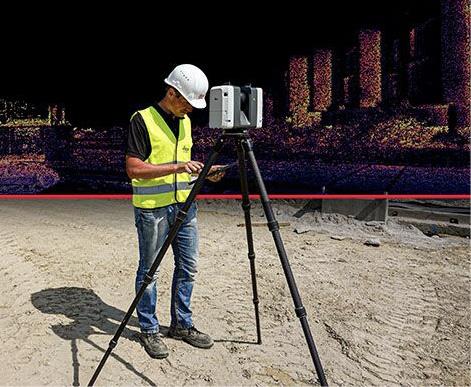
The opportunity ahead of us is to make technology-enabled informed decisions using timelier and more-relevant local information. Smart infrastructure upkeep prioritizes action based on needs and real-world conditions, not budgets or arbitrary timelines.
Sensors can automatically inspect infrastructure, collect data and report potential problems before a catastrophe arises. Artificial intelligence and machine learning allow infrastructure managers to quickly process vast amounts of data and identify patterns and anomalies that human inspectors might overlook or not see. This approach keeps the public safe and allows transportation officials to confidently deploy their resources where they’re most needed and can provide the most impact.
The Infrastructure Investment and Jobs Act, also known as the Bipartisan Infrastructure Law, passed in 2021, empowered transportation departments to deploy advanced digital construction management (ADCM) systems, practices, performance and benefits. ADCM applies to all stakeholders and all phases of the construction lifecycle, including the design, engineering, construction and operations phases.
This approach requires the intelligent deployment of technology. Technology is the professional partner contractors need, and the modern jobsite should be as technologically advanced as the modern office.
Infrastructure development is built on unique and highly interdependent operations, accentuating the possibility of outliers. This explains why projects frequently take longer and exceed budgets.
Because construction requires collaboration, generalists—not specialists—often emerge as the winning players. Successful ADCM solutions and technologies coordinate critical success factors early and completely in an infrastructure asset’s life. The right technology mix must address all construction phases.

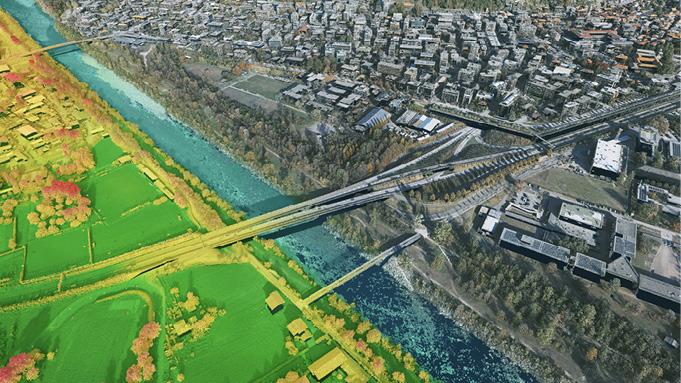
Reality Cloud Studio, powered by HxDR laser scanning software, offers an array of solutions to capture, prepare, manage, analyze and deliver complex 3D data, streamlining workflows from the field to the office and beyond.
The ‘Smart City’ of Tomorrow Requires Intelligent Decisions Today
There has been much discussion about building smart cities that facilitate people’s moves. Such a city isn’t possible without rethinking the approach to building infrastructure.
Knowing how infrastructure will be used in the future is impossible, so we can’t necessarily build assets for needs and wants 50 years from now. It requires anticipating the need for future changes, even if the precise changes are unclear. It’s about knowing what we don’t know, recognizing what we don’t know and planning for the inevitable changes.
Using digital technology throughout a project also extends assets’ lifespans. Reality capture technology can help document assets as constructed to create a digital twin—a reliable baseline for predictive maintenance and modeling.
A digital twin provides a window into what lies beneath the surface, allowing future workers to know how to approach a retrofit or an upgrade. Instead of tearing down an existing asset, it can be overhauled for a new life, which will help to conserve resources.
Analyzing historical data and current conditions can help infrastructure managers predict future maintenance needs and optimize repair schedules, reducing costs. Making informed decisions is impossible without reliable data, which requires technology. Technology as a centerpiece of the construction industry could be as impactful as its deployment and adoption in any industry.
Maintaining Infrastructure Will Save Money in the Long Run
It’s easy to take infrastructure for granted when there isn’t a problem to confront. Real vision necessitates focusing on solving problems before they crop up.
Overhauling the nation’s infrastructure will require sometimes-difficult conversations and commitments from local, state and federal officials as well as the private sector. Collaboration and investment are crucial to ensure sustainable development and maintenance.
Infrastructure maintenance is more effective when managed locally and selectively rather than centrally and comprehensively. Local management allows for tailored solutions that address specific community needs and challenges.
The possibility of a mishap will always remain. The goal is to mitigate the risk and ensure infrastructure failures remain an anomaly rather than a commonplace occurrence.
Implementing advanced technologies and proactive strategies can significantly reduce the likelihood of failures.
Success requires we roll up our sleeves and proactively address our challenges before they worsen. Because if they’re allowed to, they will be costlier and more time-intensive to rectify.
By prioritizing preventive measures and continuous improvement with smart technology, we can build a resilient infrastructure that supports our communities and economy for generations to come. That’s an outcome everyone can support.

Troy Dahlin
Troy Dahlin is the vice president for the Heavy Construction Segment of Leica Geosystems, part of Hexagon, in North America; email: troy.dahlin@leica-geosystems.com.
Stormwater Interview with Robert Page, P.E., Vice President, HNTB
TriMet’s Banfield Type 1 Substation Replacement Project

February Issue 2026