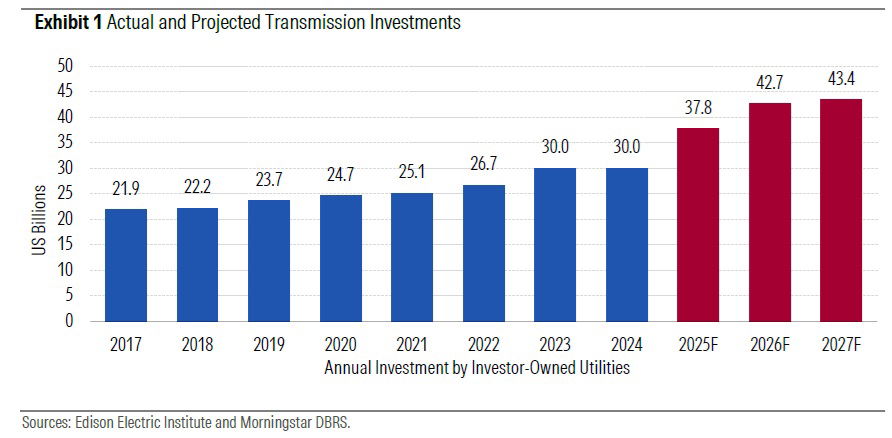
Utilities in the U.S. have forecast annual compound growth in electricity demand of around 2.5% by 2035, compared with the compound growth of 0.5% witnessed from 2014 to 2024. Along with the increased demand, the industry faces concerns about continued reliability, resource adequacy, and affordability as it works to ensure transmission capacity.
-- The surging demand for electricity means the U.S. needs to double its regional transmission capacity and quadruple interregional transmission capacity by 2050.
-- The lack of adequate transmission capacity required to move electricity from generating sources to demand centers is, in effect, a source of gridlock.
-- Innovative policies and increasing government and regulatory support are needed to build the grid of the future.
-- As investors look to benefit from North America's electrification, focused and patient capital investment in interregional transmission assets is needed to increase resilience and strengthen the electricity value chain.
"The key risks for regulated utilities and transmission owners in interregional transmission projects include a high risk of project cancellation, long lead times, construction delays, and changes in government policies," said Bukola Folashakin, Assistant Vice President, Corporate Ratings. "New transmission capacity investments need to be supported by strong guarantees that protect investors, and regulatory frameworks must support investments at a level commensurate with the volume of transmission capacity required and electricity demand anticipated."

Parul Dubey
Stormwater Interview with Robert Page, P.E., Vice President, HNTB
TriMet’s Banfield Type 1 Substation Replacement Project

February Issue 2026