While history may be a haunting reminder of past mistakes, it paints a picture of consistency when focusing on technology. As the world continues to evolve and we, as a society, move into the future, technology continues to expand and grow.
The latest hotbed of technological growth can be seen popping up in multiple areas domestically and internationally: the massive construction projects known as data centers. At the foundation of these construction wonders lie taxing demands made upon erosion control. In response to those and other industry concerns, advancements in technology also have surfaced to propel erosion control into the future with more sustainable and financially viable solutions found in hydraulically applied erosion control products (HECPs).
While typical residential and industrial construction projects claim large footprints, data centers invoke a level of shock because of their vast size. Their footprints capture large tracts of land because of the space needed for servers, storage systems, networking equipment, cooling systems, backup power modules and the other features they demand.
With the growing energy demands levied, data-center construction will continue to accelerate. With that growth, erosion-control concerns will grow in parallel, leaving many in the construction and engineering industry looking for a solution that can sustain such growth and do so more effectively than conventional methods used in the past.
What Is Erosion Control?
A core facet of construction, erosion control best describes the prevention of soil being washed away by water, wind and human activity. However, it doesn’t just describe or represent soil control, but additionally plays a role in stormwater management. The more popular examples of erosion itself include the loss of fertile topsoil; destruction of the environment, including wildlife; and damage to roadways, buildings and drainage systems.
With the results proving to be catastrophic, multiple solutions have long been utilized to thwart the destruction. Vegetation, hydroseeding and mulch usage have reigned as the more popular methods historically along with silt fencing for retention purposes. Terracing and installation of riprap solutions have been called upon to slow and divert water, with retention ponds capturing that runoff.
While these erosion controls have been used for great periods of time and earned their place as applicable solutions, they don’t offer the same success rates found with the latest technology. HECPs have entered the erosion-control market as premier solutions, and when data-center construction becomes the topic, these solutions have yielded impressive results.
“I was first introduced to HECPs about 10 years ago,” says Rob White, senior project manager with Eutaw Construction Company Inc. in Petal, Miss. “We had been trying to solve an erosion-control issue on a project for two years, and then we learned about HECPs, which proved to be an instant success.”
What Are HECPs?
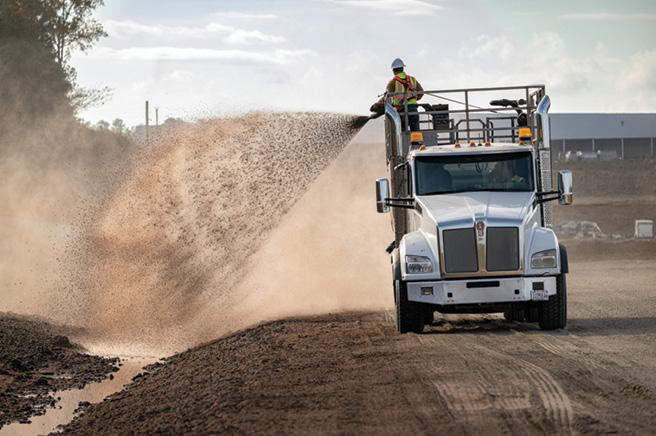
According to White, who holds a civil engineering degree, the goal of erosion control is to promote and sustain vegetation growth. This serves as the permanent barrier to prevent erosion. HECPs are a solution that utilizes mulch fibers, binders and tackifiers, polymers, and other additives mixed with seeds and fertilizers. Through a hydraulic application, the material is blended with water in a tank. Using a hose or cannon, the contents are dispersed to target areas demanding erosion control.
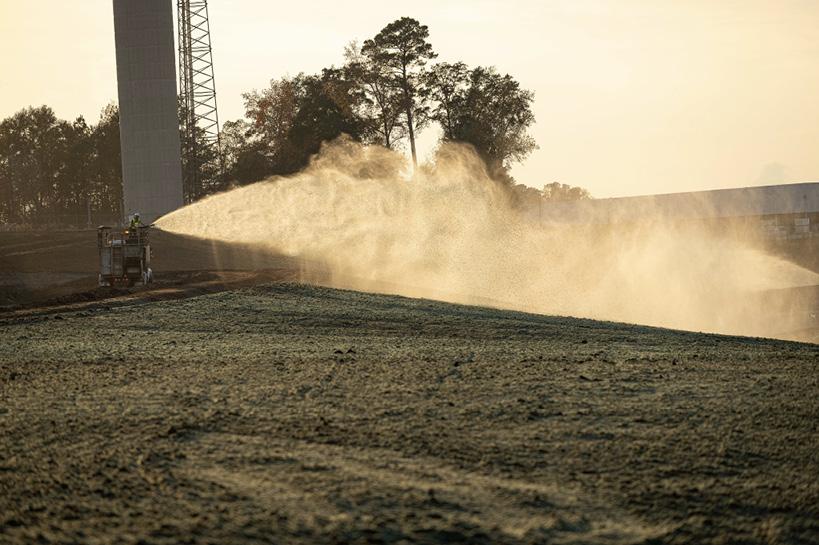
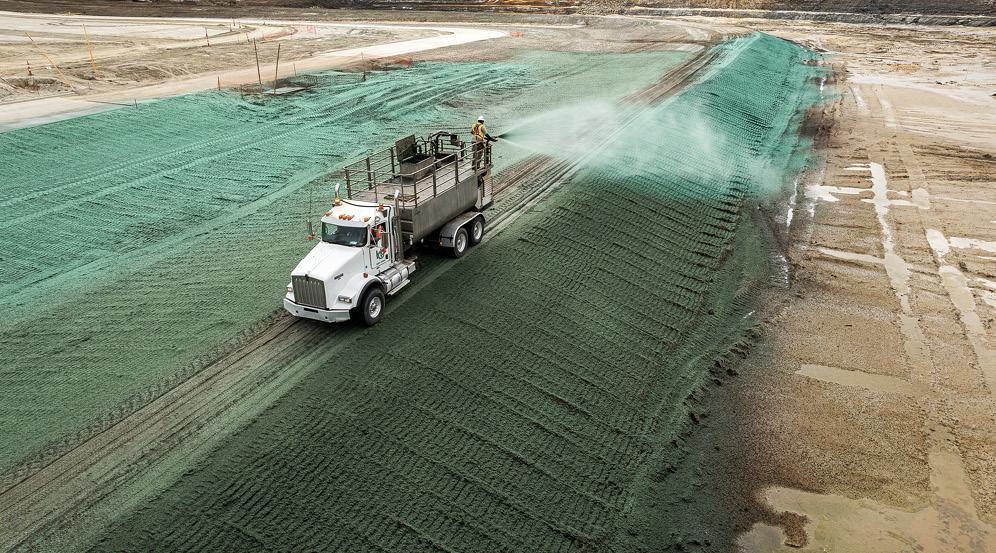
While HECPs shield soil from rain impact and runoff—primary culprits of erosion—they hold moisture to support seed germination while also stabilizing disturbed parcels of earth and slopes. Their use provides considerably longer protection, yet they’re a temporary erosion-control solution in the sense that they protect the foundation at the start of and during vegetation growth.
How Do HECPs Assist in Data-Center Construction?
Data-center construction sites find themselves at continued environmental scrutiny while they adhere to stringent stormwater and erosion-control permitting regulations. As a result, engineering firms involved with data-center construction projects must focus heavily on erosion control as a critical component in the prework specific to construction and permitting.
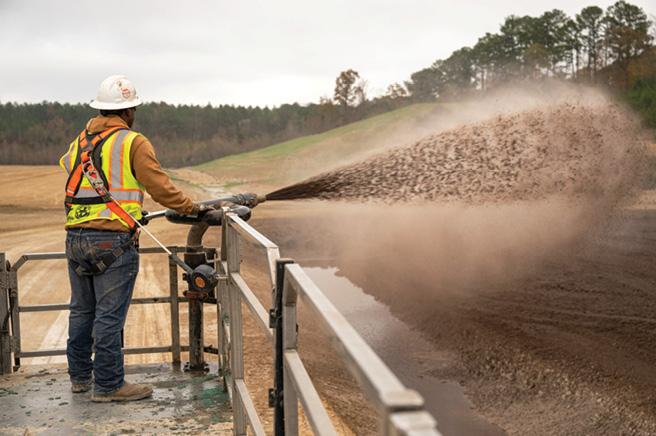
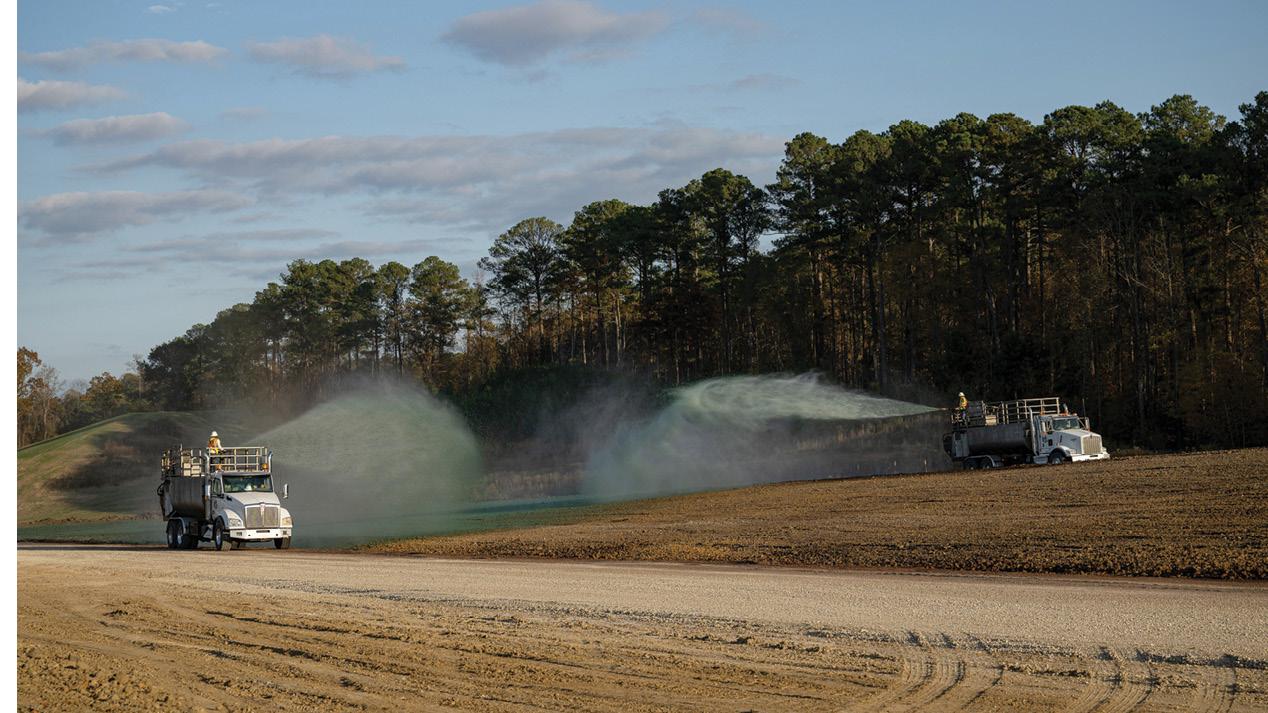
Erosion control reigns as an extensive piece in protecting critical infrastructure. Stormwater and runoff can undermine foundations as well as damage underground utilities, compromise access roads and increase sediment in drainage systems that could potentially create a damming or overfill issue.
Additionally, loose soil and mulch are traditionally used in sloping areas of erosion control, such as with ditches, and struggle to remain in place. HECPs and tackifiers offer an alternative to lock material in place. With the large footprints of data centers, diversions and ditches are frequently used to divert stormwater. HECPs provide a quick and lasting solution to slopes and embankments refraining from labor-intensive efforts.
According to White, the massive size of data-center construction sites and the speed at which building takes place catalyzes the need for smart erosion-control solutions.
“The larger your site, the more ground you are disturbing, which dictates greater erosion-control needs,” notes White. “These are all fast-paced projects, so you need quick solutions.”
With primary factors being time and the large quantity of civil work needed, HECPs offer a successful solution to promote and sustain the large parcel of vegetation growth needed for erosion control. In cases where topsoil is poor in quality or deficient in quantity, HECPs can be used as an alternative. This solution eliminates the need to truck in soil with a potentially poor biology at increased costs. The trucking, along with the labor and equipment needed to spread the soil, can yield excessive costs.
Before determining which HECP solution is needed to ensure success, soil testing is conducted to identify that critical biology of what’s needed to ensure plant growth. Through testing, a picture is painted of what the soil is lacking and also what it may contain in abundance. Those results dictate the best HECP makeup to be used.
“It’s the same situation as agriculture, where farmers don’t just go out and plant, hoping the crops grow,” says White. “There is a great deal of science that goes into deciding what amendments are needed to ensure a quality crop.”
White says a simple calculation of area can be submitted to HECP suppliers who then formulate a solution and the quantity needed. Once delivered, it’s hydraulically applied. At that point, the foundation has been laid for vegetation growth.
Trae Hamm is president of Hydro Green Erosion Control, an installer of erosion- and sediment-control products as well as stormwater-management solutions. Data-center construction is a facet of his portfolio, and he has seen firsthand the savings initiated by HECP use.
“HECP topsoil replacement is really efficient when it comes to not having to submit significant amounts of topsoil onsite,” explains Hamm. “It is much more cost effective than bringing in generic offsite topsoil through the use of truck carriers.”
As an alternative solution, Hamm says costs decrease by having the HECP media delivered to site and then ultimately using the spray-in process to apply it mechanically via hydro seeders. This eliminates the need for the dump trucks, haul trucks and spreading equipment used in traditional practices of dirt work.
“After spraying the material, we take a tackifier application on top of that, which stabilizes the slopes vs. traditional methods,” notes Hamm.
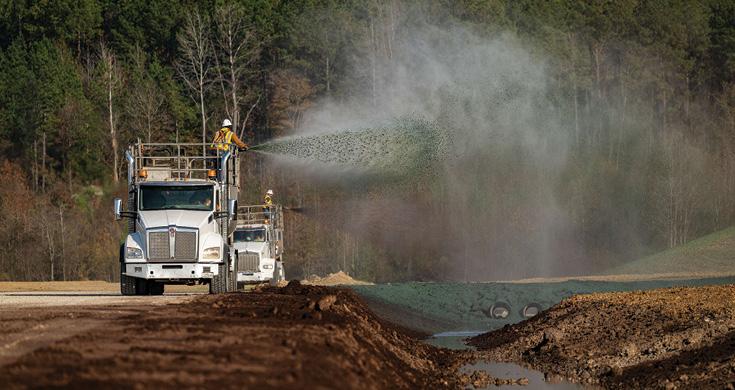
The efficiency and longevity of these products paired with the cost savings in application support their role as the viable solution in erosion control during data-center construction, but that reigns as only the first step of the solution. The finality comes in establishment of the vegetation needed for erosion-control longevity.
“The goal for us is to grow vegetation, so we need the erosion-control product or material to stay in place for six months to a year at best to allow for that growth,” explains Hamm. “Vegetation grows up through that to stabilize all our existing contours after civil operations.”
White says HECPs provide long-term erosion-control solutions through their ability to endure the time it takes for vegetation to establish itself and continue to grow. Previous methods of conventional civil work often require additional attention. Traditional dirt-work applications can weaken due to time and the effects of wind and runoff. With tackifying agents and their ability to withstand wind and moisture, HECPs offer a better outcome.
Returning to a site to shore up conventional erosion-control solutions comes at a price. More soils, additional equipment and added manpower demand additional costs only to repair a solution that could potentially fail again before vegetation takes over.
“Had we been introduced to HECPs and used them on the front end of that two-year project, we would have saved a great deal of time and money and provided a more permanent solution,” concludes White.

Nick Vaccaro
Nick Vaccaro is a freelance writer and consultant who serves the energy and construction sectors; email: nav@vaccarogroupllc.com.
Stormwater Interview with Robert Page, P.E., Vice President, HNTB
TriMet’s Banfield Type 1 Substation Replacement Project

February Issue 2026