As architectural projects grow more complex and timelines continue to compress, many design teams are re-examining a long-standing assumption in their workflows: that design, visualization, and delivery must happen in separate stages, across disconnected tools.
D5 has announced a unified, AI-driven design workflow that intended to eliminate this fragmentation—allowing architects to work in a continuous, iterative flow from early concept through final visualization. Rather than introducing another standalone product, D5’s approach brings real-time concept exploration, curated design resources, and high-fidelity rendering into a single connected system. The result marks a shift from tool-based pipelines to workflow-level integration.
For decades, architectural workflows have been shaped more by software constraints than by how architects actually think and design. Modeling, visualization, asset sourcing, and presentation evolved as isolated steps, often requiring repeated exports, re-imports, and technical resets. While individual tools became faster over time, the underlying structure of the workflow remained fragmented—introducing friction precisely when design thinking is most fluid.
Architecture doesn’t progress in a straight line. It advances through iteration—testing ideas, responding to feedback, refining decisions, and repeating that loop across multiple stages. D5 unifies the creative workflow, to support that reality, not disrupt it.
From Fragmented Pipelines to Continuous Design
At the core of the new D5 Workflow is the idea that visualization should no longer be treated as a downstream task. Instead of designing first and visualizing later, architects can now see, test, and refine ideas visually as they form—keeping context, materials, lighting, and spatial relationships visible throughout the process.
This shift is enabled by the integration of three components:
- D5 Lite, which brings AI-native real-time visualization directly into early design tools like SketchUp, bridging the gap between conceptualization and design development. It allows architects to visualize instantly, lowering the barrier to professional-grade rendering and keeping ideas moving from the earliest stages.
- D5 Works, a curated asset platform designed specifically for architecture, landscape, and interior design, integrated into the workflow to remove the need for external libraries, manual file management, or format conversion.
- D5 Render 3.0, the latest evolution of D5’s real-time rendering engine, serving as the intelligent core of the workflow with advanced AI capabilities and physically accurate realism.
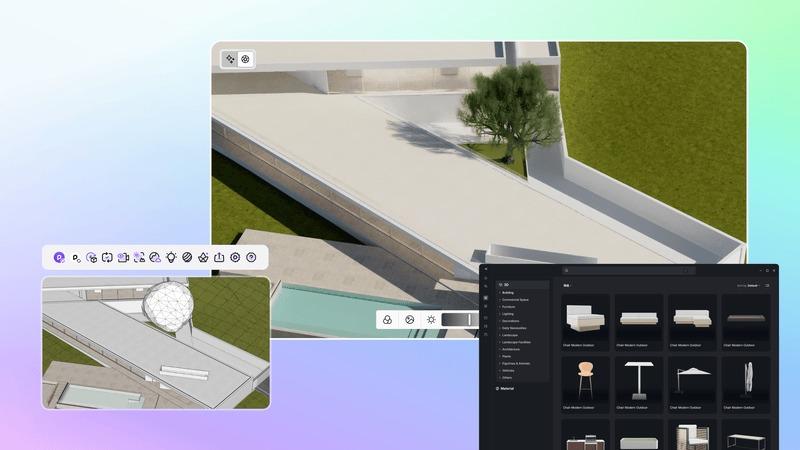
D5 Works, a curated asset platform, integrated with D5 Lite to bridge concept and design development for instant visualization.
Together, these components form a continuous loop rather than a linear sequence—supporting the way architectural ideas are developed, challenged, and refined in practice.
AI as an Enabler of Iteration, Not a Replacement for Design
A defining aspect of the new workflow is the role of artificial intelligence. D5 emphasizes its use as an assistant that removes repetitive setup work and shortens feedback cycles.
Features such as AI Scene Match, AI Asset Recommendations, and AI image-to-3D generation allow architects to move more quickly from intent to visualization, test alternatives in context, and iterate without restarting their work. The emphasis is not on automation for its own sake, but on continuity—keeping designers focused on architectural decisions rather than technical overhead.
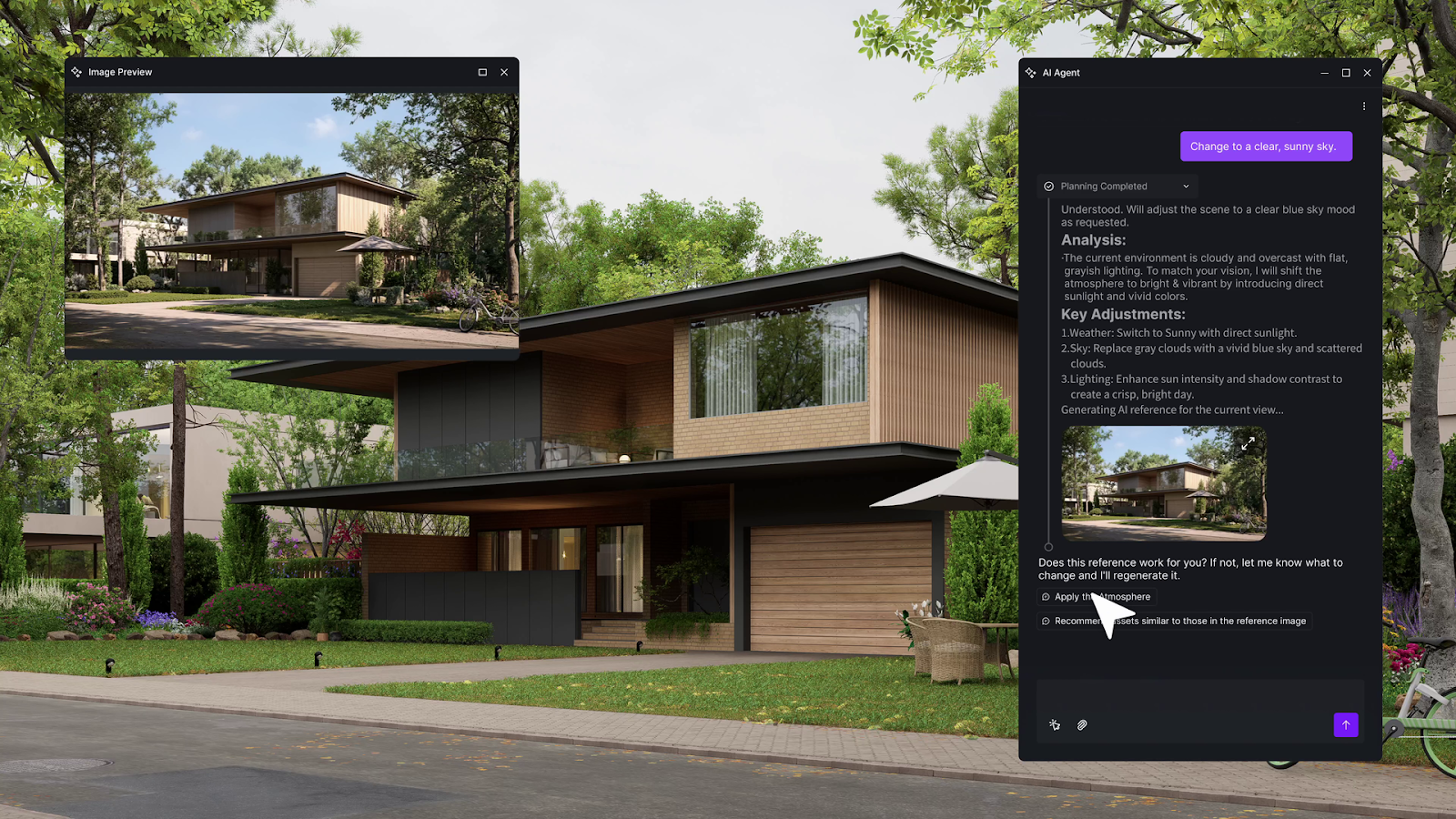
D5 AI Scene Match — intelligent lighting and environment setup, allowing easy refinement through prompts.
In this model, AI is most valuable when it protects creative momentum, allowing architects to remain engaged with the design problem instead of managing software complexity.
A Workflow-Level Shift for the AEC Industry
The introduction of a unified workflow reflects a broader shift within the AEC industry, as firms increasingly seek systems that support collaboration, iteration, and clarity across teams and project stages. As projects demand faster decisions and clearer communication with clients and stakeholders, the cost of fragmented workflows becomes more visible—not only in time lost, but in diluted design intent.
By aligning concept exploration, contextual development, and final visualization within a single connected environment, D5 positions its platform not as a rendering tool, but as a rethinking of the architectural design process itself.
Industry observers note that similar transitions have already taken place in other creative and technical fields, where integrated workflows have replaced collections of specialized but disconnected tools. For architecture, the implications extend beyond productivity to design quality, collaboration, and the ability to iterate meaningfully before decisions become fixed.
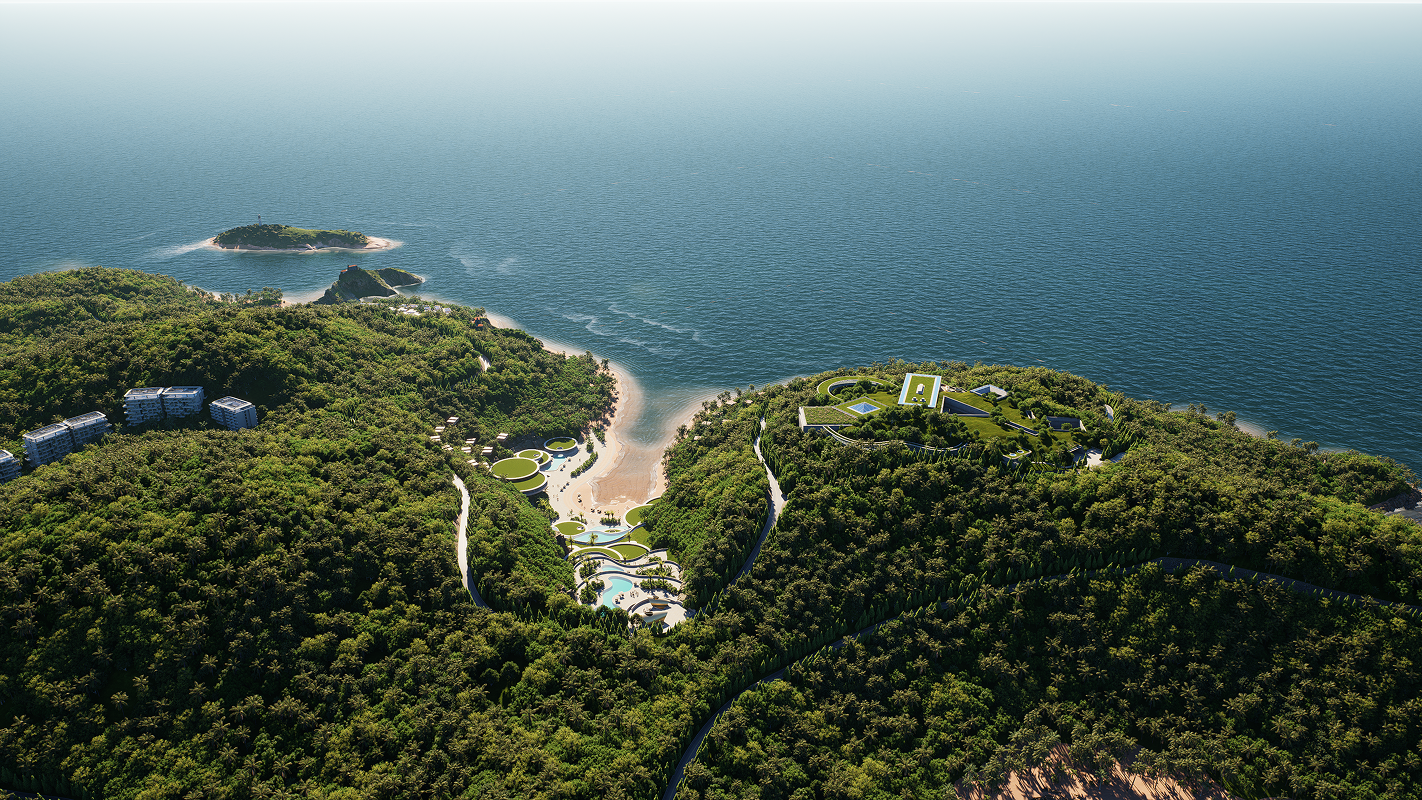
Rendered in D5 3.0, showcasing the new Ocean feature
Looking Ahead
With the release of D5 Render 3.0 and the introduction of its unified workflow, D5 signals a long-term commitment to reducing friction across the entire design lifecycle. Future development will continue to deepen the integration between real-time visualization, AI-assisted workflows, and asset ecosystems—supporting architects as projects grow in scale and complexity.
As the profession moves into 2026 and beyond, the most impactful design tools will not simply be faster. They will be aligned with how architects work—visually, iteratively, and in constant dialogue with context.
For firms seeking to move beyond fragmented pipelines and toward a more continuous, flow-based design process, that shift is no longer theoretical. It is already underway.

Parul Dubey
Stormwater Interview with Robert Page, P.E., Vice President, HNTB
TriMet’s Banfield Type 1 Substation Replacement Project

February Issue 2026