The Stormwater Report: Framework for STEPP Initiative Released
In July, the National Stormwater Testing and Evaluation for Products and Practices (STEPP) initiative crossed a milestone with the release of a document that provides recommendations on potential program design components. The document, Framework for a National Testing and Evaluation Program Based Upon the National Stormwater Testing and Evaluation for Products and Practices (STEPP) Initiative (Project No. INFR2R14), also addresses both general programmatic and individual program aspects. WEF...
Framework for STEPP Initiative Released
In July, the National Stormwater Testing and Evaluation for Products and Practices (STEPP) initiative crossed a milestone with the release of a document that provides recommendations on potential program design components. The document, Framework for a National Testing and Evaluation Program Based Upon the National Stormwater Testing and Evaluation for Products and Practices (STEPP) Initiative (Project No. INFR2R14), also addresses both general programmatic and individual program aspects. WEF...

Innovyze Releases SWMMLive and ICMLive Generation V7.0, Powering Real-Time Stormwater, Wastewater and Watershed Modeling
Broomfield, Colorado, USA — leading global innovator of business analytics software and technologies for smart wet infrastructure, today announced the worldwide release of the V7.0 Generation of its SWMMLive and ICMLive for real-time operational forecasting, modeling and management of urban drainage systems. The latest release sets the scene for the next quantum leaps in smart water modeling, giving wastewater utilities an unsurpassed tool for operating and managing their collection systems, ide...
Rainwater Harvesting and Make Up Water: The Why, When, and How
Rainwater harvesting (RWH) stores rainwater for reuse to supply non-potable uses like irrigation, wash water, toilet flushing, and laundry. During long dry periods the demand will drain the storage cistern down to a critical level where the pressurization pump(s) will need to shut down to prevent dry run damage. Make up water is typically a potable connection to the rainwater harvesting system to supply water, allowing the RWH system to continue to supply the non-potable end use applications u...

Contech Engineered Solutions Releases a New Stormwater Design Tool
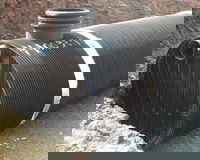
Contech Engineered Solutions launched a new on-line program for designing stormwater detention and infiltration systems constructed from Contech corrugated metal pipe (CMP). The new tool will allow engineers to quickly prepare designs for estimates and project meetings, and be more efficient with their time. The free tool is available at www.conteches.com/dyods. The new tool, known as the Design Your Own Detention System (DYODS®) tool, fully automates the layout process for stormwater detent...

EPA Guidance Provides New Options for Meeting TMDL Goals
The goal of the Total Maximum Daily Load (TMDL) program is arguably simple - to develop watershed level conservation plans designed to restore impaired waters and attain applicable water quality standards – but its development and implementation has not been simple. In an attempt to bring new clarity to the process of incorporating TMDLs into stormwater permits, the EPA issued a revised guidance document last November entitled “...

Infrastructure Outlook: Stormwater Chambers Provide Storage and Infiltration While Aiding Recharge
Effective stormwater management and discharge continues to become more important as an increasing amount of land is covered by impervious surfaces due to residential and commercial development. Such conversion of land use, along with increasing regulatory requirements on water quality and quantity, creates critical considerations that must be addressed. If a project requires a stormwater-management solution, it’s important to understand the choices and how they can help solve the specific pro...
Developing a Stormwater Trash Control Strategy
There are many types of trash and debris found in stormwater and they each have an effect on our environment and infrastructure. If your community is interested in developing a trash control strategy, here are six key points that should be considered:1. Identify all outfalls and estimate trash loads – This may seem obvious, but you need to build a database of all outfalls and estimated trash loads for each drainage basin. Only then will you know the true extent of the problem and have a base...
Toowoomba Regional Council Tackles the Challenges of a Failing Common Effluent System
In Queensland, Australia, in 2008, eight local governments were merged into one to form what is now the Toowoomba Regional Council (TRC). This council serves a population of approximately 120,000, and maintains water and wastewater networks totaling 3,200 kilometers in reticulation mains. TRC undertook a study in 2011 focusing on the township of Crows Nest as its flagship for assessing the existing infrastructure and the development of a future sewer system. The study was designed to identify...

Is Green Infrastructure Diminishing Innovation?
Since the Environmental Protection Agency, and in turn state and local regulators, have gone all in on green infrastructure (GI) and low impact development (LID) concepts a seemingly regrettable consequence has emerged. Topics specific to the broader adoption and implementation of GI have monopolized our collective dialog on stormwater management of late. The predominantly positive press and barrage of GI heavy conference agendas seemingly suggest that if we apply GI far and wide then water q...
Stormwater Interview with Robert Page, P.E., Vice President, HNTB
TriMet’s Banfield Type 1 Substation Replacement Project

February Issue 2026