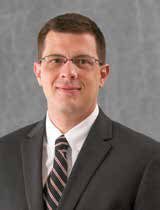
Future Forward: Using Climate Models to Better Engineer Future Pavement Surfaces
This page profiles innovative and impactful applied research in civil and structural engineering to spur continuing thought and dialog to create a better industry. These profiles are based on interviews, and the opinions and statements are those of the subject and are not necessarily shared or endorsed by this publication. Shane Underwood is an associate professor of Civil Engineering in the North Carolina State University Civil, Construction and Environmental Engineering Department. Hi...

Executive Corner: When Those Aging Baby Boomers Just Won’t Retire
Alan co-founded a successful consulting engineering firm when he was in his thirties. Through the years, the practice grew steadily, adding new staff, offices and owners along the way. When Alan turned 60, he announced his intent to retire at age 65. That was 10 years ago. Now, at age 70, he still enjoys his work, and while he’s cut back on hours, business travel and administrative duties, he still manages a significant portfolio of business. The last time someone asked when he planned to retire...

From the Editor: Small Firms, Big Productivity Gains
In the last 20 years, global productivity in the construction industry has grown by a measly 1 percent. By comparison, manufacturing productivity has increased by about 4 times that amount. In financial terms, productivity is the measure of output for a production process compared to the input required for that production. In construction, the output typically is expressed in some physical measurement of what’s built (e.g., length of a road, volume of earthwork movement, square-footage of a bui...
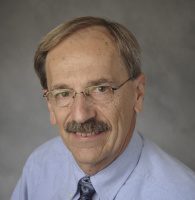
Final Thoughts: Thankful to Be an Engineer and All That Comes with It
We’re in the season when many of us stop and think about the things for which we’re thankful. For some, it’s our family, our health, our jobs, our home. For others, it’s nature, the ability to travel, the freedom to speak. For some, it’s difficult to be thankful for anything more than just having something to eat today. The range is staggering. In this column, and at the risk of sounding trite, I invite you to think about some of the things you’re thankful for … as an engineer. I will share som...
ReEngineering the Engineer: Making Way for the Future
Like many others, my firm had a very busy 2017. We were fortunate to pick up a couple new clients at the beginning of the year, and that led to additional projects and a workload that caught us a little by surprise. We didn’t realize the pent-up demand for construction, because consulting engineers tend to be a bit removed from much of the preliminary work that happens before a developer or owner decides to move forward with a project. We’ve also been numbed by the last eight years of recession...
From the Editor: Infrastructure (and Humans) Under Siege
On Aug. 24, 2017, Hurricane Harvey made landfall near Rockport, Texas, as a Category 4 hurricane. For the next five days, the storm dumped a historic amount of rain on the second-largest state in the union before heading back out to the Gulf of Mexico. On Aug. 29, 2017, Harvey made landfall a second time, this time in Louisiana, wreaking havoc before dissipating two days later. When the skies finally cleared, 82 people had lost their lives, and the states suffered an estimated $70 billion to $1...

Infrastructure Outlook: Why Isn’t Infrastructure Relevant?
America has a life-threatening infrastructure problem. Recent events in Houston and Miami have underscored both the need for infrastructure investment and its critical role in public safety. Yet despite natural disasters and a stream of almost daily news of failing bridges, broken water mains, antiquated air-traffic control technology and patchwork electric grids, Americans remain alarmingly complacent. This lack of urgency is ironic given that the wisdom of investing in our nation’s roads, bri...
Future Forward: Think Long Term for Maximum Value
This page profiles innovative and impactful applied research in civil and structural engineering to spur continuing thought and dialog to create a better industry. These profiles are based on interviews, and the opinions and statements are those of the subject and are not necessarily shared or endorsed by this publication. Dr. John Brown Miller is a global expert on public infrastructure with an eye on efficiency and value. He has a 35-year focus on bringing practical business, legislat...
Change Leader: Simplify Legal Structures to Get Things Done
Philip K. Howard, chair of not-for-profit Common Good, is a lawyer who is actively involved in shaping public policy. In addition to writing several books during his career, he recently wrote a report, “Two Years, Not Ten Years: Redesigning Infrastructure Approvals,” which shows that a six-year delay in starting construction on public projects costs the nation more than $3.7 trillion, including the costs of prolonged inefficiencies and unnecessary pollution. Change If Howard could change anyth...

Code Update: Steel Bridge Design Specifications Revised in New AASHTO Edition
Interim revisions to AASHTO LRFD Bridge Design Specifications (7th Edition) were published in 2016 with a few minor revisions to the steel bridge design sections of the specifications. The 8th edition of AASHTO LRFD Bridge Design Specifications is expected to be published later in 2017. As far as steel bridge design is concerned, a major revision to the design of bolted field splices and minor revisions to other sections are expected. Let’s take a deeper look at the major design checks for stee...
Stormwater Interview with Robert Page, P.E., Vice President, HNTB
TriMet’s Banfield Type 1 Substation Replacement Project

February Issue 2026