From the Editor: Engineers Seem to Be Adjusting to New Circumstances
I am a proud Baby Boomer, but I don’t feel like I’m one of those to whom the “OK, Boomer” derogative is directed. Just like every generation, mine has some particular (some might say peculiar) characteristics. But this is a time when all generations should come together, help each other and, maybe even more importantly, learn from each other. This pandemic requires just that, and it gives all of us an opportunity to be better. Varying Stages of Preparedness Informed Infrastructure has been ope...
Thoughts from Engineers: Project Management in the Age of COVID-19
If there’s one positive to the coronavirus pandemic, it’s that we’ve been knocked out of our comfort zones, and forced to recalibrate and reevaluate the important things in life and business. The virus and global economic downward spiral have driven home the fact that we and our businesses are significantly more vulnerable than we thought. Seasonal flu and its annual culling of the human population have always been an unfortunate fact of life, but COVID-19 added another potentially deadly and un...

ReEngineering the Engineer: What Was I Thinking?
A funny thought crossed my mind this week. I started my career at a slow time in the early 1980s and considered myself lucky to find work at a small engineering firm doing what I was educated to do. I managed through slow spots in the early 1990s, Y2K and even 9/11. And our office survived the six-plus years of the Great Recession relatively intact. The funny thought that popped into my head: I was subconsciously thinking I’d get to retire without having to deal with another crisis … By the tim...

Infrastructure Outlook: Putting Designs into Motion with Extended Reality
The digitization of data is paving the way for more-advanced technology that connects the design process to real-world information. The key to digitization is tying in 3D models at the start of the design process and integrating constructible data that enable all stakeholders to work together and share data in real-time to optimize the design, build and operate lifecycle. When it comes to planning and design, how do you tie data in the model from the office to the field? Augmented- and mixed-re...

Executive Corner: Lost Value in M&A: A New Way to Create and Capture Value
Buying or selling a firm creates risk and opportunity for both buyers and sellers. Up to 30 percent of a firm’s potential value is lost during and after the typical acquisition. For those selling, they’re losing millions in potential rewards for their efforts building a firm. For buyers, their return on investment can evaporate almost instantly. For this installment of “Executive Corner,” we explore how innovative firms are gaining new insights to maximize value when buying, selling or preparin...
Thoughts from Engineers: The Food Industry Has a Major Impact on Water Resources
Cheesemaking is a bonafide American industry that generates some $50 billion in revenue every year. In the regions of New York where dairy farms dominate, small-town communities and cheese production have coexisted peacefully through the years. A longtime American favorite, Philadelphia Cream Cheese has been produced in Lowville, N.Y., for nearly 40 years. A new plant became operational in 2017 and expanded Kraft Heinz’s (parent company of Philadelphia Cream Cheese) production line to also incl...
From the Editor: Spring’s Arrival Leads to Thoughts of Unfrozen Infrastructure
As I write this in early March, we’re experiencing sunny, warm days in the Midwest. We had a warmer-than-average winter with less snow than usual. Spring is the time when we witness the change from gray and white to blue and green. The sky clears itself of the ever-present cloud cover and melts the snow of winter, giving way to blue above and green growth at ground level. If this sounds a bit poetic, it’s because I’m preparing myself for the companion season of road construction and farm-equip...

Project Management Insights: Managing Remote Teams (Or During a Pandemic)
Depending on where you live and work, there may be a stay-in-place order recently issued by your state or local government. Your firm or office building manager may have closed facilities out of abundance of caution. Whatever the situation, you are more than likely now working from home. Since construction is considered an essential service in many states, projects are moving forward; as are most in the design phase. A project manager develops some specific and unique skills to be successful, b...

Infrastructure Outlook: Cloud-Based CMT Makes Social Distancing and Remote Work Possible
The majority of U.S. states consider construction and building material suppliers essential. This means many testing labs are still open. It has also created two problems for those in the industry: How do you follow CDC social distancing guidelines at a busy testing lab? And how do stakeholders access test results from home to keep business moving? Moving some or all the CMT workflow to a cloud-based platform can help answer both of these questions – and fast. Practical Social Distancing in t...

CARES Act Impacts Engineering and Construction Sector
The CARES Act does not provide direct relief for additional costs and delays to individual projects. COVID-19 precautions continue to impact construction by delaying material shipments and reducing labor availability, as well as governmental orders to halt many construction projects. Some ongoing or planned construction projects are at risk of being suspended or terminated because of reduced demand in various sectors, such as hospitality or oil and gas, because of the COVID-19 pandemic. Man...
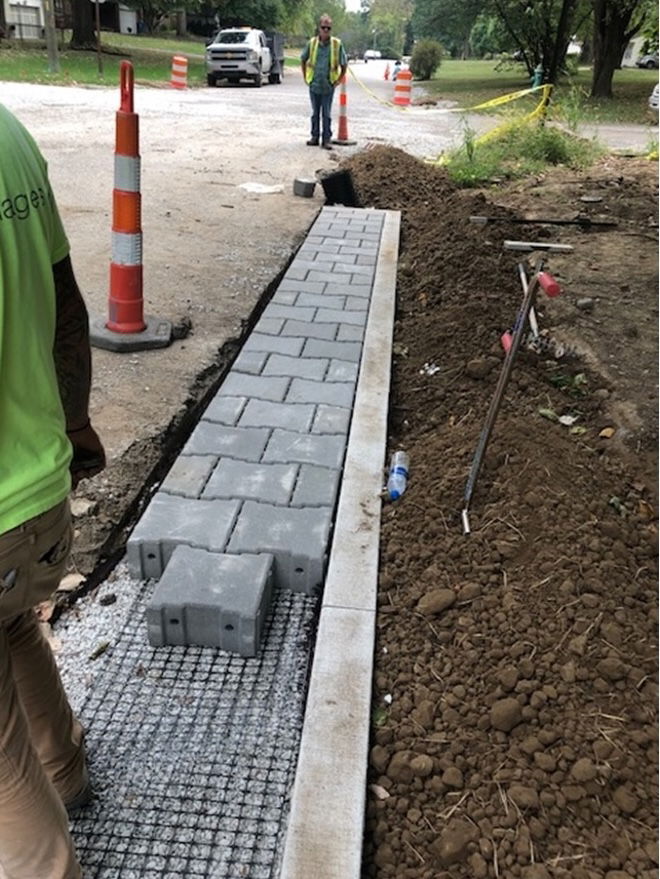
Stormwater Interview with Robert Page, P.E., Vice President, HNTB
TriMet’s Banfield Type 1 Substation Replacement Project
February Issue 2026