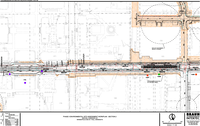
Real-Time Reporting: Information Management Keeps $1 Billion Light-Rail Project on Track
Traditionally, the construction and engineering sectors have been somewhat reticent to adopt new technology. However, with the prospect of a U.S. government infrastructure bill in the works, which could trigger spending of $200 billion in federal money during the next decade to spur an additional $1.3 trillion in spending from cities, states and private companies on major projects, this is changing as firms look to modernize and improve efficiency and collaboration. Leveraging a cloud-based nex...

From the Editor: Where Do You Go When You’ve Reached the Peak?
For the last 17 years, I’ve worked with surveyors, contractors, and engineers to help them lower their costs and increase profits. In doing so, I’ve seen many firms get to the point where they’ve reached “peak efficiency.” It’s exciting when an organization puts in the effort, makes upgrades, tweaks the process and gets positive results. But then what? Where do you go when you’ve gone as far as you can? In the early 2000s, I was consulting on earthwork operations. Earthwork is one of the larges...

Code Update: SMDI Updates Guide Specification for Highway Bridge Fabrication
High-Performance Steels (HPS) have been used in bridge projects for more than two decades, helping builders reduce weight, ease construction and improve design flexibility. HPS made a rapid entry into the bridge industry, with the first HPS 70W bridge completed in December 1997, only three years after starting the cooperative research effort to develop the material. Today, it’s estimated there are more than 500 HPS bridges in service in the United States. Although HPS use isn’t a new trend, ong...
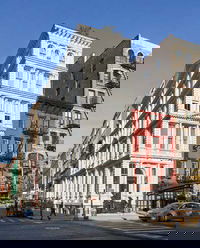
Bond ... 54 Bond Street: NYC Building Restoration Wins Prestigious Award
54 Bond Street in Manhattan is a circa-1874, corner cast-iron building in the French Second Empire style. Its recent facade preservation and restoration project in Manhattan received a 2018 Lucy G. Moses Preservation Award, the New York Landmarks Conservancy’s highest honor for preservation excellence. “The $4.5 million project was phased, with the first phase being the facade restoration, and the second, final phase being the reconstruction of the sidewalk, which is currently being completed,”...
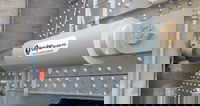
Sponsored Content: Taylor Devices Can Save Lives and Reduce Costs
Sponsored By: Across the globe, current building codes only require that new buildings be designed for collapse prevention. Unfortunately, they do not require easy-to-achieve “performance-based designs” that greatly improve performance during an earthquake. It’s assumed that a brand-new building meeting all modern building codes will perform well during earthquakes and allow residents to inhabit them immediately following a major seismic event. However, a brand-new build...

Executive Corner: Why Is My Company’s Valuation Lower When Selling to Key Employees vs. Selling to Another Company?
I’ve spoken with countless exasperated A/E firm owners through the years who’ve asked why their firm’s internal valuation doesn’t reflect a number similar to what they believe they can reasonably expect from an external sale. Most, but not all, are first-generation owners who aren’t sure why they’re expected to sell shares internally at a discount to what they might receive on a pro-rata basis if their company were to sell to an outside acquirer. Understanding the various value levels can help...

Emergency Operations: Loyola University Medical Center Upgrades Stormwater Mitigation System After Dangerous Flooding Event
By Bill Wood, P.E. The year 2013 typically isn’t remembered for its storms. There were no Hurricane Harveys or Marias, no Superstorm Sandys, and no Katrinas. However, while not given names, smaller storms still can severely impact communities and cause major damage and disruption at local and regional levels. This was the type of storm that hit the Loyola University Medical Center (LUMC) Campus in Maywood, Ill., just west of downtown Chicago, in April 2013. On the heels of weeklong int...

Final Thoughts: Certainly Uncertain: Difficult for Engineers
Uncertainty. This is a word that engineers have a problem with, as we like to be able to predict what will happen. Nobody wants to design or construct a project for which we can’t predict the performance. Sadly, uncertainty now is part of the future of our national infrastructure. More than a year ago, when the current president took office, I prepared to write about the new infrastructure program he had promised. I collected some data and statistics to help show the need for increased emphasis...
Engineered Solutions: Accelerated Vegetation Establishment on Caltrans Fire Reclamation Site
Sponsored By: By Adam Dibble, CPESC-IT, CESSWI, and Matt Welch, CPESC, CESSWI In December 2017, the Freeway Fire ignited the brush along the Interstate 210/Interstate 15 interchange near Rancho Cucamonga, Calif. Due to high winds, the blaze quickly spread and burned more than 20 acres of land before firefighters were able to get it under control. With acres of precious vegetation burned on the side of a well-traveled interstate, the California Department o...
Letters from July/August 2018 Issue
Click Here to View the Letters from July/August 2018 Issue
Stormwater Interview with Robert Page, P.E., Vice President, HNTB
TriMet’s Banfield Type 1 Substation Replacement Project

February Issue 2026