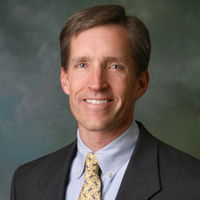
ReEngineering the Engineer: To Change or Not to Change? The Answer Usually Is to Change
Codes have changed significantly through the years. When I started engineering, the structural section of the North Carolina Building Code was just more than 100 pages and was basically the “one-stop shop” for all our structural engineering analysis and design criteria. There were material codes as well, but they were also similarly simple, and calculations were easy to follow. Today, the structural portion of the International Building Code itself is about 200 pages, but it also references oth...
Letters from May 2019 Issue
Click Here to View the Letters from May 2019 Issue

Feature Article Follow Up: 167 N. Green St.
To complement a feature published in the April 2019 issue of Informed Infrastructure, "Making Everyone Happy: Early and Effective Collaboration to Realize a Beautiful Building," Todd Danielson, the magazine's editorial director, went to the Chicago office of Forefront Structural Engineers and interviewed Steve Franckowiak, S.E., P.E., associate, and Amanda Featherstone, S.E., P.E., project engineer.

Change Leader: Electric Utilities Face Many Challenges and Opportunities in 2019
These profiles are based on interviews, and the opinions and statements are those of the subject and are not necessarily shared or endorsed by this publication. Mark Burke is a technical and business development advisor for Black & Veatch, an employee-owned engineering, procurement, consulting and construction company. Black & Veatch produces annual reports based on expansive surveys for a variety of industry sectors. Mark Burke contributed to the “2019 Strategic Directions: Smart Utilit...

Making Everyone Happy: Early and Effective Collaboration to Realize a Beautiful Building
To complement this feature, Todd Danielson, the magazine’s editorial director, went to the Chicago office of Forefront Structural Engineers and interviewed Steve Franckowiak, S.E., P.E., associate, and Amanda Featherstone, S.E., P.E., project engineer. Click here to watch the video. Structural engineers occupy a difficult niche in high-rise construction; too often, their role is perceived as a “reality check” on the actual cost-effective constructability of beautiful, ambitious buildi...

Tunnel Vision: Blended Technologies for Tight Schedules and Tighter Conditions
By John Stenmark John May is accustomed to taking on challenging projects, but he soon recognized that this one would be different. Meeting the project requirements would involve multiple technologies, advanced software and a team of dedicated and—quite literally—flexible surveyors that would spend days working in a cramped underground pipe built to carry water, not humans. The work originated from a utility owner in Northern California who needed to rehabilitate a 90-year-old buried water...

Aiming for Net Zero in Public Buildings: 8 Principles
Buildings account for as much as 40 percent of all energy consumed in the United States. To increase the efficiency of buildings and address climate-change issues, government programs increasingly promote “net zero energy” (NZE) goals for public buildings. The following eight guiding principles for project design phases will help produce buildings that generate energy onsite using clean renewable resources through the course of a year that are at least equal to the total amount of energy consu...

Infrastructure Outlook: Power Play: Protecting Critical Infrastructure from Cyber-attacks
Governments generally define the essential assets of a functioning society as its critical infrastructure, including electricity, communications, heating, healthcare and transport networks. For the United States, attempted cyber-attacks on these systems continue to be an attractive target. The ability of a foreign actor to gain control and operate them remotely would most assuredly wreak havoc. The lives of millions of people would be immediately impacted if one or more of these major systems be...

From the Editor: Use Different Viewpoints to Uncover the Unknown Unknowns
I read a meme-like quote a few days ago: “It amazes me that I can wirelessly transfer data from my brain to another brain by vibrating the air with my voice box.” Simultaneously whimsical and thought provoking, it reminds me to think of everyday things—like talking—from a different perspective. A similar approach may have been on the minds of scientists who recently discovered something startling and new about sound itself. Four hundred years ago, Isaac Newton laid down the laws of classical ph...
From the Editor: A Brief Glimpse at Useful AEC Pocket Tech
Living with tech is a lot like living with a new puppy: it’s not easy to recognize changes occurring through time until you step back and look at where we were not long ago compared to where we are today. Every couple of years, I see a graphic (or sometimes a video) showing how the number of devices on a typical literal desktop has reduced through the years, thanks to advances in smartphone technology. You can see one from the CATO Institute at bit.ly/2Im7ThI. As the graphic illustrates, it’s n...
Stormwater Interview with Robert Page, P.E., Vice President, HNTB
TriMet’s Banfield Type 1 Substation Replacement Project

February Issue 2026