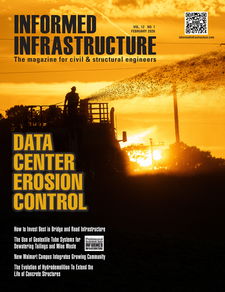
Transportation Troubleshooting: The ‘Four C’s’ of High-Speed Rail Build Support for the Long-Term Vision
Enhancing passenger rail service can improve the lives of millions of Americans by cutting the time they spend commuting, reducing air pollution and greenhouse gas emissions, and enabling new growth patterns such as transit-oriented development, where rail stations serve as hubs for mixed-use communities of homes and businesses. But the real game-changer will be high-speed intercity passenger rail. A level of service that people in China, Japan, the United Kingdom (UK) and Europe have long had...

Getting Geotechnical: Calming the Storm with ESCS
Storm intensity and the loss of pervious surfaces pose significant challenges for infrastructure design. When stormwater is unable to drain properly, it can flood around buildings. Unfortunately, extended saturated conditions can damage aging foundations and erode soils, potentially leading to uneven settlement, cracking and bowing. But complex stormwater solutions can be cost- and maintenance-intensive, making them impractical for many projects. To meet the challenge, low-impact development te...

Future Forward: One Water: A Connected, Global System Requires Site-Specific Engineering
This interview was recorded by Todd Danielson, the editorial director of Informed Infrastructure. You can watch a video of the full interview above or by visiting bit.ly/3Pf40vR. Stacy Hutchinson, PhD, is the associate dean of research and graduate programs in the Carl R. Ice College of Engineering at Kansas State as well as chair of the standing council of the Engineering Research Visioning Alliance (ERVA). Stacy Hutchinson’s passion is water, and she’s been working in the f...

Bringing Harmony to Bustling Hangzhou: Archi-Tectonics Creates New Natural Landscape for 2023 Asian Games
Given its rectangular footprint and startlingly verdant, sylvan hilliness amid densely clustered tall buildings, Hangzhou’s new Canal Asian Games Ecopark invites comparison to New York City’s Central Park, especially when seen from above. But unlike Central Park, everything on view in the 116-acre (47-hectare) Ecopark—every building, tree, slope, hill and waterway—is brand new, or at least in a brand-new location. Development of the park began in summer 2018 with three months of excavation and...
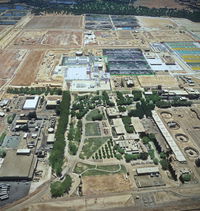
Waste Water Not an Option: 5D Technology Helps EchoWater Project Save $400 Million (and a Lot of Water)
Getting Control of the Project To learn more about the 5D planning, scheduling and costing digital twin that was at the heart of the EchoWater Project and its ability to finish on time and under budget, I interviewed Project Controls Cubed’s Jeff Campbell, director of virtual planning, and Serelle Corn, lead planner and managing member. Some excerpts from that interview made it into this article, but you can watch the full video interview above or at bit.ly/3Pc4LWB. Infrastru...

Thoughts From Engineers: Designing for the Next Storm
Civil engineers use a range of hydrologic methodologies and software—from the widely used Rational Method to U.S. Army Corps of Engineer’s HEC-HMS to the Environmental Protection Agency’s SWMM and countless others—to model the flow of surface runoff and design stormwater management systems suited to a specific level of acceptable flood risk. So long as rainfall patterns remained consistent with historical Intensity Duration Frequency (IDF) curves, our models—and the resulting infrastructure—held...
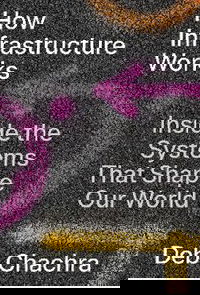
Book Review: “How Infrastructure Works,” By Deb Chachra
Reviewed by Angus Stocking A much longer and more detailed review can be found online at bit.ly/3ThIJmM or by scanning the accompanying QR code. Deb Chachra’s “How Infrastructure Works” is a bestseller released to wide acclaim in late 2023. Adulation by the literary class isn’t necessarily a strong recommendation for infrastructure professionals, but on reading Chachra’s book, I find it’s indeed an information-rich and important contribution to infrastructural theory. And as a life...
Engineered Solutions: Planning for CAD Success in Four Phases
Download the Engineered Solution

Engineering The Future: The Future Starts Now
Maria Lehman will be writing a regular column for Informed Infrastructure, starting with this April 2024 issue. Shortly after becoming ASCE president, she was interviewed for an April 2022 cover feature: bit.ly/3IkrT1a. “Engineering” and “passion” are two words rarely seen together, so when they are used collectively, you can’t help but pay attention. I have an incredible passion for engineering and how it creates the foundation for a healthy, prosperous and resilient future. I’m very tha...
National Climate Policy Aimed at Reducing U.S. Greenhouse Gases Also Would Improve Water Quality
A climate policy that raises the price of carbon-intensive products across the entire U.S. economy would yield a side benefit of reducing nitrate groundwater contamination throughout the Mississippi River Basin. The Gulf of Mexico, an important U.S. fishery, also would see modest benefits from the nitrate reductions. These were among the conclusions of a recent study, “U.S. Climate Policy Yields Water Quality Cobenefits in the Mississippi Basin and Gulf of Mexico,” published in the Proceedings...
Stormwater Interview with Robert Page, P.E., Vice President, HNTB
TriMet’s Banfield Type 1 Substation Replacement Project

February Issue 2026