
Final Thoughts: Bridge Work: From Wooden Covers to Recycled Steel
As I was previewing this issue of Informed Infrastructure, I came across a brief summary of an article about the engineering of tall wood buildings. Although I’m not quite old enough to have designed any covered bridges, I have some experience with wooden-bridge structures. Readers may recall from previous “Final Thoughts” columns that I spent the early part of my career with the Indiana Department of Transportation in the Bridge Design Section. During my time there, the department still had a...

Structural Solutions: Nuggets of Wisdom for Engineers Young and Old, Part 3: The Final Chapter
My previous two columns covered two main pieces of advice I like to share with students at the Direct Connect session at the NASCC conference: careful use of computer software, and mastering verbal and written communication. In this issue, I’ll finish my list of sage advice for the students with a couple of quick hitters. Listen to Your Clients As experts in our field, it’s easy to answer questions quickly. Most of us are anxious to share our expertise the moment we think we know what the answ...

Sponsored: MicroStation CONNECT Edition - The Foundation of Efficient Civil Engineering Design Workflows
Most of us must work with various file formats, integrate multiple disciplines, and improve project workflow efficiency. With all the different applications used by the many consultants that collaborate on today’s design projects, a lack of interoperability between software products represents a huge risk. That’s where Bentley Systems comes in. MicroStation CONNECT Edition, and all Bentley BIM applications, are built on the same comprehensive modeling platform so that users can easily progre...

Future Forward Interview: Can Cross-Laminated Timber Replace Concrete and Steel?
Casey Malmquist is CEO and president of SmartLam Technologies Group, the first commercial manufacturers of cross-laminated timber (CLT) in the United States. V1: Please provide a brief background of your education and career before SmartLam. Malmquist: I have a BS from Gustavus Adolphus College in Minnesota, a degree in environmental studies. V1: Did you have any previous work experience before SmartLam? Malmquist: I have been a builder and developer in construction for 35 ye...

Change Leader Interview: Overcoming Budget Constraints at State DOTs
J.D. D’Arville is the GIS/LRS Data Management Administrator for the Alabama Department of Transportation (DOT), and John Russell is the surveying and mapping administrator for the Alabama DOT. V1: Can you briefly describe your professional background? D’Arville: I have roughly 27-and-a-half years with the Alabama Department of Transportation. I have a Bachelor of Science from Troy State University. I started out in the drill crew, and then came into the preliminary design section. From...

From the Editor: There’s No Replacement for ‘Learning by Doing’
I recently visited a job site of a friend of mine who is a construction manager. I met with him to discuss the use of emerging drone and reality-capture technologies, but I ended up tagging along as he crisscrossed the site, solving one problem after another. In one case, the footing for a wall wasn’t poured in the correct location, because the arc of the wall was “eyeballed in” in the CAD file. In another issue, a sewer was 12 feet from where it was supposed to be—the construction staking was...

Vibration Control in Hospital Construction
A renovation of White Plains Hospital, a 123-year-old healthcare facility north of Manhattan, featured the construction of the new, steel-framed, six-story Center for Cancer Care. Long-span high-performing composite slabs were designed to support heavy booms over operating rooms and limit vibration that could adversely affect hospital occupants. Project Team Steel Decking Source: New Millennium Building Systems Architect of Record: Perkins Eastman Structural Engineer: GACE Consult...

Code Update: ACI 318: High-Strength Reinforcing Bars
AMY M.R. TRYGESTAD, P.E., F.ACI (above) The motivation for developing high-strength reinforcing bar (HSRB) is driven from the construction community. Design practitioners are looking for improved, efficient and sustainable design solutions, while contractors are looking to address rebar congestion and scheduling/cost issues related to reinforcing bars. HSRB is regarded as any reinforcing bar with a yield strength greater than 60,000 psi. The adoption of HSRB started when Grade 75 bars appear...
Engineered Solutions: Barren Arkansas Roadside Springs to Life After Soil Amendments
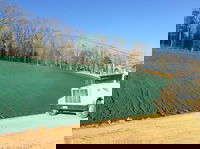
After completing an open cut slope for a recent highway project, the Arkansas State Highway and Transportation Department (AHTD) encountered a difficult mitigation challenge: a soil bed totally unsuitable for organic growth. The highly acidic soil, composed primarily of clay, rejected initial attempts at sustainable vegetation and threatened to create a high erosion environment. Soil analysis confirmed the poor growth conditions. Clay content was measured at 50 percent; such high concentrations...

What Is the P3 Model? Can It Save Infrastructure?
Todd Danielson, the editorial director of Informed Infrastructure, spoke with several private-sector infrastructure executives to learn more about the public-private partnership (P3/PPP) model, how it works and if it can be part of the solution to the massive infrastructure problem in the United States and beyond. Danielson: What’s the status of infrastructure in the United States? Hopping: I think most of us agree, even Congress agrees across the aisle, that our infrastructure is rea...
Stormwater Interview with Robert Page, P.E., Vice President, HNTB
TriMet’s Banfield Type 1 Substation Replacement Project

February Issue 2026